There comes a point in our journey when we have heard many teachings, collected many practices, and asked many people for guidance. Yet the question remains: Can I recognize wisdom when it begins to speak through my own experience?
Sometimes it arrives in stillness. Sometimes in a conversation that asks us to listen more carefully. Sometimes in the quiet realization that we already know the next honest step, even if taking it asks something of us.
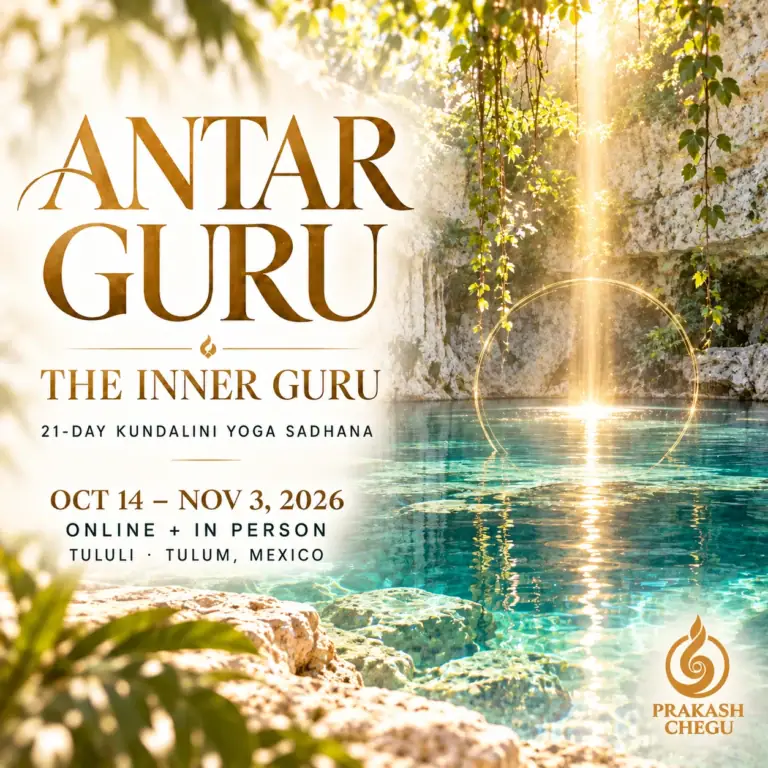
Antar Guru means the inner teacher. For 21 days, we will make space to meet that teacher through Kundalini Yoga, mantra, meditation, contemplation, and daily life. We will practice receiving what our teachers and traditions have given us, listening with greater depth, and allowing what we learn to become visible in the way we live.
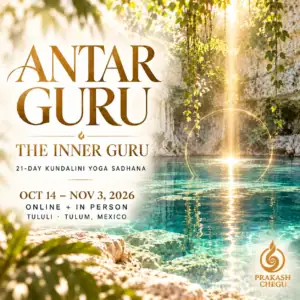
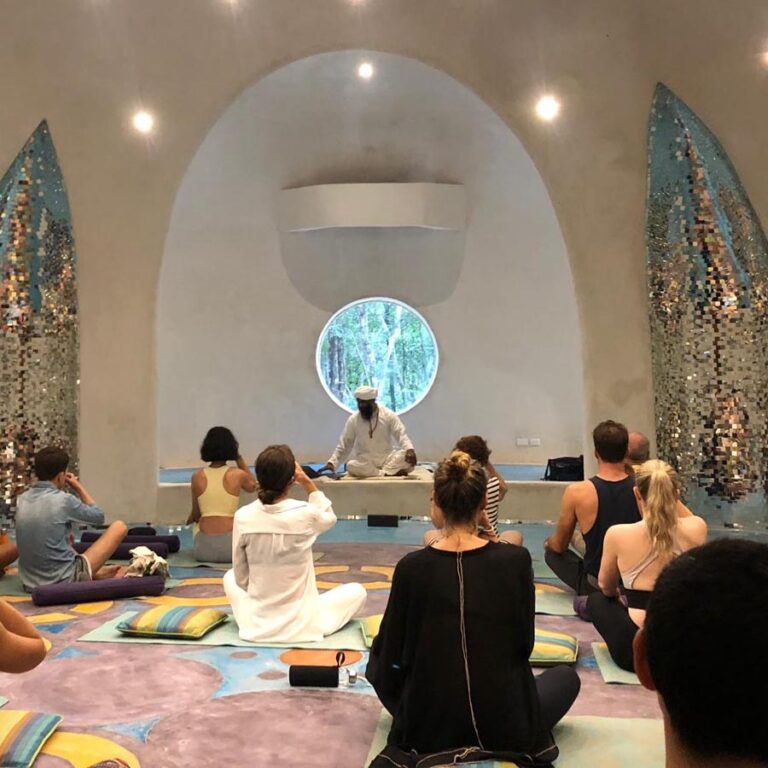
The journey begins together, in person as well as globally via Zoom, at Tululi in Tulum on October 14.
The heart of this Sadhana
We often look for guidance at the moment we face a difficult choice. But a trustworthy relationship with our inner wisdom is built long before that moment: by showing up, listening, noticing our patterns, practising what we have learned, and remaining willing to grow.
The inner guru is revealed through that relationship. It grows as we become honest about what we sense, what we know, what we fear, and what we still need to learn. A teacher can show us a doorway; our own practice teaches us how to walk through it.
In Kundalini Yoga, we begin practice with Ong Namo Guru Dev Namo, an invocation of creative consciousness and divine wisdom. It invites us to become receptive to teaching while recognising that wisdom must also be experienced and lived. Antar Guru explores that meeting place: what we receive from teachers, lineage, sound, silence, and life itself, and what we come to understand through sincere practice.
In Antar Guru, we will explore:
- The art of being a student: receiving a teaching with humility, curiosity, and discernment.
- The living relationship with lineage: honouring what has been passed to us through sincere practice.
- The intelligence of sound and silence: using mantra and meditation to listen beneath the surface of the mind.
- Inner guidance in real life: learning to recognize an impression, inquire into it, and meet its consequences responsibly.
- Wisdom in relationship: allowing our speech, boundaries, listening, and service to reflect what we have learned.
This is a space for direct experience. You can arrive with a long history of practice or with a sincere beginning.
What will you actually learn?
To become a more conscious student
We will explore the teacher–student relationship from the inside. What makes us receptive? When do we resist a teaching because it challenges us? How can we honour a teacher or a lineage and still bring honest inquiry to what we hear? We will look at the Golden Chain as a living relationship with what has been passed on, and consider how practice allows a teaching to become more than information we have collected.
In daily life: Choose one teaching you admire and observe how it changes your actions for a week.
To understand the movements of your own mind
Kundalini Yoga describes protective, possibility-seeking, and neutral or meditative qualities of mind. We will use this lens to notice when caution helps, when hope opens a door, and when either one begins to dominate our perception. Movement, breath, and meditation give us a way to observe those shifts in real time. We will practise distinguishing what happened from what we assumed it meant.
In daily life: Before reacting to a difficult message, write down its actual words, your feeling, your interpretation, and what remains unknown.
To experience sound as a teacher
Mantra offers more than an atmosphere for meditation. We will explore how attention changes when we give ourselves fully to sound, rhythm, repetition, and the silence that follows. The Kundalini tradition speaks of Shabd Guru, sound as teacher. The practice invites us to notice the quality of our own voice and listening, then carry that awareness into communication with others.
In daily life: Notice your voice before a conversation that matters. What changes when you listen as carefully as you speak?
To make room for subtle awareness
Drawing from Prakash’s experience with Sat Nam Rasayan, we will explore the capacity to feel and remain present with experience. We will notice sensation, attention, and resistance without requiring an immediate explanation or trying to force an experience to change. This sensitive listening can reveal how quickly we move to fix, defend, or escape what we feel.
In daily life: Sit with an ordinary difficulty and ask, “What is here before I decide what it means?”
To cultivate intuition with integrity
An impression can matter without becoming the final answer. We will explore the difference between a quiet knowing, a familiar fear, a wish, and a story we have repeated for years. A responsible decision can include inner listening alongside facts, values, consequences, and the people affected by our choice. Trust grows as we practise, act, observe, and remain willing to learn.
In daily life: Take one small, honest step on a decision you have been circling, and notice what that step teaches you.
To let wisdom shape your relationships
The practice becomes visible in how we speak, listen, keep our word, set boundaries, repair mistakes, and serve. We will look closely at the gap between what we understand in meditation and what we do when life becomes inconvenient. Rather than demanding perfection, we will practise returning to integrity in concrete ways.
In daily life: Let one conversation, one boundary, or one act of service express the quality you have been cultivating.
Our 21-day journey
Week One · Receive the Teaching
We begin with the capacity to learn. What has shaped the way we hear a teacher? What does reverence feel like when it is accompanied by honest inquiry? Through movement, mantra, reflection, and practice, we create a steadier ground from which to receive. We will examine the influence of our earliest teachers, the gifts and limitations of inherited habits, and the difference between admiring a teaching and applying it.
The questions: Who taught me to listen? Where do I defend myself before I have heard? What am I ready to practise with consistency?
Week Two · Recognize the Teacher Within
As our attention becomes quieter and more spacious, we explore sound, silence, sensitive awareness, and the subtle difference between an insight, an old fear, a wish, and a story we have told ourselves many times. We listen more deeply without demanding an instant answer. We learn how trust grows through repeated experience and honest reflection.
The questions: What do I actually sense? Which meaning have I added? Can I let a worthy question mature without rushing to certainty?
Week Three · Become the Teaching
The measure of a teaching is in how we live it. We turn toward communication, relationships, responsibility, and service. How do we act when no one is watching? How do we stay a student while allowing our presence to be of use to others? We close by shaping a personal rhythm of practice that can continue beyond these 21 days.
The questions: Does my word match my practice? What do I do when I realise I was mistaken? Where can my presence be genuinely useful?
What we will practise
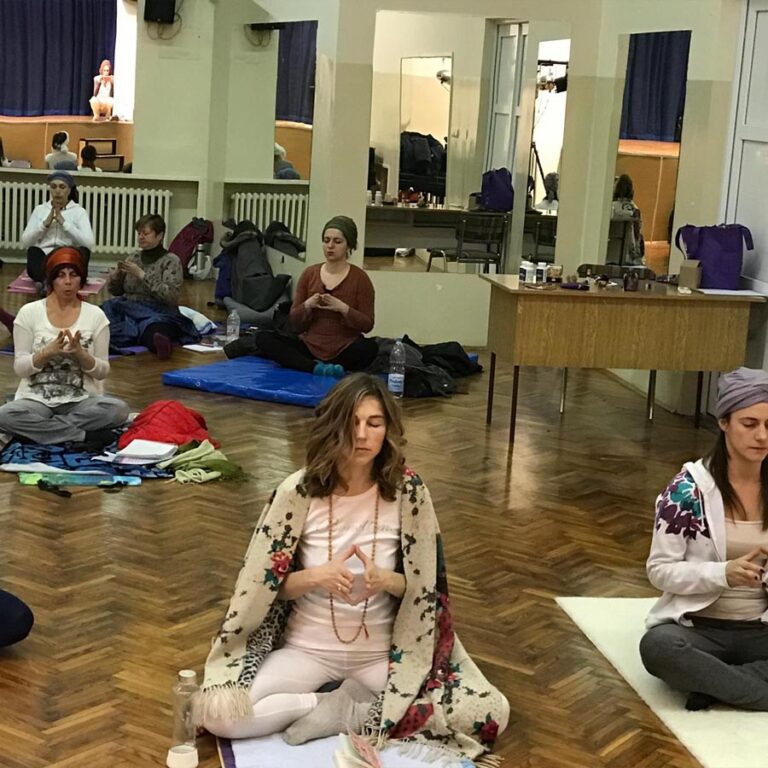
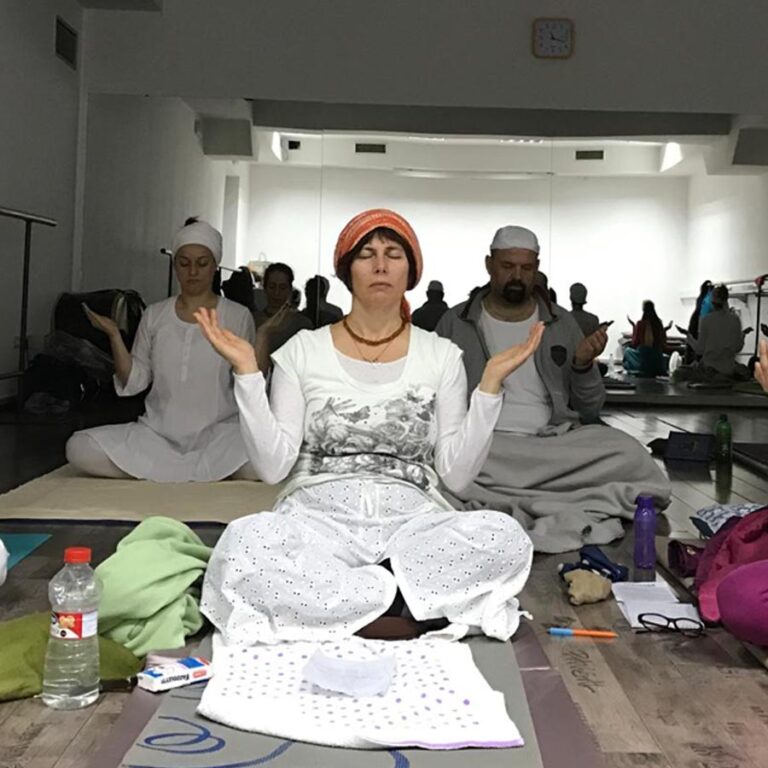
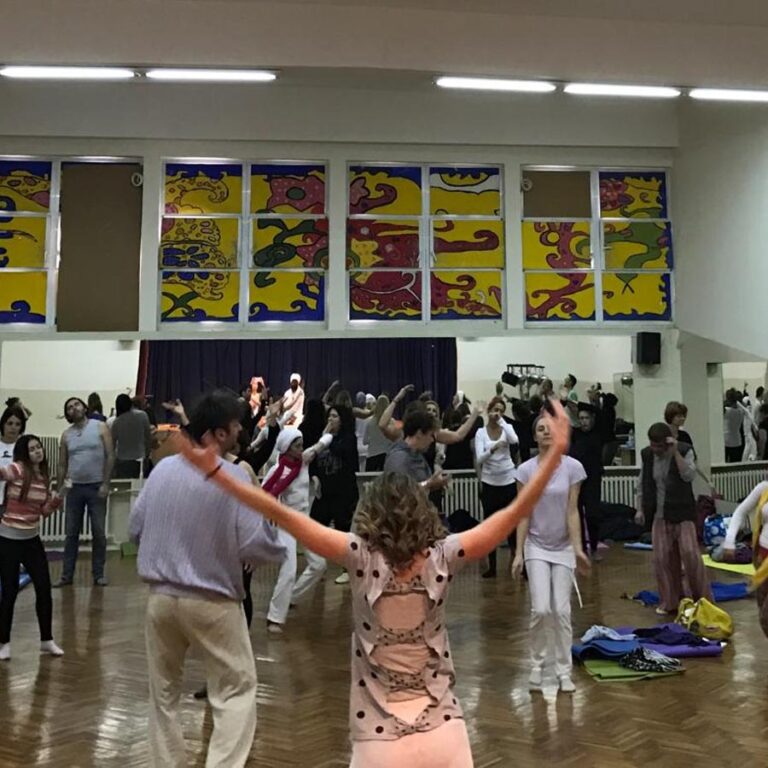
Each day will bring a distinct inquiry supported by Kundalini Yoga, meditation, mantra, breath, contemplative listening, and integration. Some days will be active. Some will ask us to become still. We will also bring the work into ordinary moments: a conversation, a choice, a boundary, a commitment, an act of care.
We may enter through movement and breath, give ourselves to a meditation or mantra, and then make time to notice what the practice revealed. A reflection question or simple action can help carry that day’s learning into life. There is room for different experiences: clarity, tenderness, distraction, resistance, or an unanswered question can each teach us something when met with attention.
Prakash will draw on his years of teaching Kundalini Yoga and his experience with Sat Nam Rasayan to hold a space for sensitivity and deep listening. The practices will serve the unfolding theme of each day, giving the journey depth and variety rather than repeating the same experience twenty-one times.
You may wish to keep a journal. A simple daily question will help bring the teaching from the practice room into your life.
Who this is for
Antar Guru is for you if you are ready to deepen your practice and your relationship with your own knowing. You may be seeking a steadier daily rhythm, exploring your connection with a teacher or tradition, or noticing the gap between spiritual insight and the way you live. You do not need to have all the answers. A willingness to practise, observe, and participate is enough.
Your guide · Prakash Chegu
Prakash is a Kundalini Yoga teacher, mentor, and Sat Nam Rasayan practitioner. He has taught Kundalini Yoga since 2014 and practised Sat Nam Rasayan since 2016. His teaching brings together devoted practice, lived inquiry, sound, silence, and a deep respect for each person’s direct experience. In Antar Guru, he will guide the journey while making room for you to discover what becomes possible through your own practice.
Join us
Antar Guru — The Inner Guru
21 days · October 14 – November 3, 2026
Opening in person at Tululi, Tulum, Mexico
Energy exchange: US $222
Come as a student. Come with your questions. Come ready to listen more deeply, practise with sincerity, and allow wisdom to take shape in the way you live.