
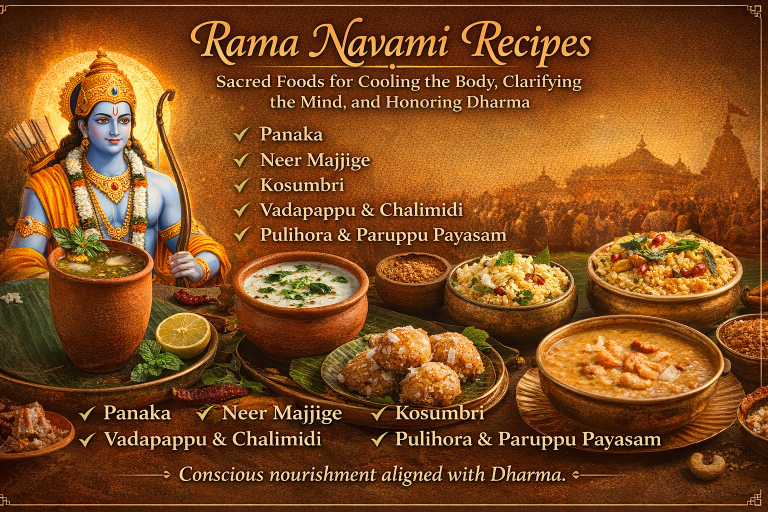
Rama Navami is not just a spiritual observance—it is a perfectly designed Ayurvedic food system aligned with season, physiology, and consciousness.
Falling at the threshold of spring moving into summer, this festival understands something modern nutrition often forgets:
Food is not just fuel. It is frequency.
Every preparation on Rama Navami is intentional—cooling the body, stabilizing the nervous system, and supporting a Sattvic (clear, harmonious) state of being.
This guide extracts and refines the traditional recipes into a modern, usable, deeply conscious culinary blog rooted in your source material .
The Philosophy Behind Rama Navami Food
Before we enter recipes, understand this:
Rama Navami food is designed to:
- Cool internal heat (Pitta regulation)
- Hydrate deeply
- Support digestion without heaviness
- Keep the mind calm and clear for prayer
This is why:
❌ No onion, garlic
❌ No heavy oils
❌ No overstimulation
✔ Light
✔ Fresh
✔ Seasonal
✔ High prana
The Sacred Trinity of Cooling Foods
These three form the core Rama Navami offering, especially in South India:
- Panaka (cooling electrolyte drink)
- Neer Majjige (spiced buttermilk)
- Kosumbri (raw lentil salad)
1. Panaka — The Ancient Electrolyte Elixir
This is not just a drink.
This is Ayurvedic hydration perfected centuries ago.
Ingredients
- ½ cup jaggery (grated)
- 2–3 cups chilled water
- Juice of 1 lemon
- ½ tsp dry ginger powder
- A pinch of black pepper
- ¼ tsp cardamom powder
- Pinch of rock salt
- Optional: edible camphor (tiny pinch)
- Fresh Tulsi leaves
Method
- Dissolve jaggery in water completely
- Strain to remove impurities
- Add lemon juice, ginger, cardamom, pepper, and salt
- Finish with Tulsi leaves and (optional) camphor
Why This Works (Ayurvedic Insight)
- Jaggery → sustained energy, iron
- Lemon → alkalizes and cools
- Ginger → digestion
- Pepper → enhances absorption
This is a functional hydration system, not just a beverage
2. Neer Majjige — Nervous System Cooling Buttermilk
This is one of the most underrated gut + nervous system regulators.
Ingredients
- 1 cup fresh yogurt (not sour)
- 3–4 cups water
- 1 tsp grated ginger
- 1 green chili (optional)
- Curry leaves (chopped)
- Coriander leaves
- Salt
Tempering (optional but recommended):
- Mustard seeds
- Pinch of asafoetida (hing)
Method
- Whisk yogurt and water until light and frothy
- Add ginger, herbs, and salt
- Optional: pour tempering over the top
Why This Works
- Probiotic → gut balance
- Cooling → reduces internal heat
- Light → supports fasting
This is liquid stability for your system
3. Kosumbri — Living Protein Salad
A raw, enzyme-rich dish that keeps the body energized without heaviness.
Ingredients
- ½ cup split yellow moong dal (soaked 2 hours)
- 1 cucumber (finely chopped)
- 1 carrot (grated)
- Fresh coconut (grated)
- Pomegranate seeds
- Lemon juice
- Salt
Tempering:
- Mustard seeds
- Curry leaves
- Green chili
Method
- Soak dal until soft but not mushy
- Combine with vegetables and coconut
- Add tempering
- Add salt and lemon only before serving
Why This Works
- High protein + fiber
- Raw → high prana
- Light → supports meditation
This is food that doesn’t slow your consciousness down
Sacred Andhra Offerings
These are deeply traditional and often overlooked.
4. Vadapappu — The Simplest Offering
Minimal, pure, powerful.
Ingredients
- Soaked moong dal
- Optional: coconut, raw mango, salt
Method
- Soak, drain, serve fresh
Why This Matters
This dish represents:
Simplicity as sacredness
No cooking. No complexity. Just nourishment.
5. Chalimidi — Sacred Sweet Offering
A deeply traditional rice + jaggery preparation.
Ingredients
- Fresh rice flour
- Powdered jaggery
- Cardamom
- Coconut
- Ghee
Method
- Mix rice flour + jaggery
- Add cardamom and coconut
- Slowly add ghee to form dough
- Shape into small portions
Why This Works
- Dense, grounding
- Sweet but not overstimulating
- Ritualistic
North Indian Rama Navami Bhog
This is typically offered during Kanya Pujan.
6. Kala Chana — Protein + Earth Element
Ingredients
- Black chickpeas (soaked overnight)
- Cumin
- Dry spices
- Ghee
Method
- Boil → sauté in ghee with spices
7. Sooji Halwa — Sacred Sweetness
Ingredients
- Semolina
- Ghee
- Sugar
- Water
- Cardamom
Method
- Roast → add syrup → cook until thick
8. Puri — Expansion Energy
Ingredients
- Whole wheat flour
- Water
- Ghee/oil
Method
- Roll → deep fry
This trio represents abundance, nourishment, and celebration
Temple-Style Celebratory Dishes
After fasting, more elaborate foods are prepared.
9. Pulihora — Tamarind Rice
Key Insight
The magic is in the tamarind reduction paste and mustard seed depth.
10. Paruppu Payasam — Sacred Sweet Ending
Ingredients
- Moong dal
- Jaggery
- Coconut milk
- Cardamom
- Ghee
Method
- Roast dal → cook → add jaggery → finish with coconut milk
This dish completes the cycle:
effort → offering → sweetness
The Deeper Truth About Rama Navami Food
This is not festive indulgence.
This is conscious nourishment aligned with Dharma.
Each dish is designed to:
- Support fasting without depletion
- Keep the mind clear for mantra
- Balance heat during seasonal transition
- Anchor the body while elevating awareness
Final Reflection
You can cook all these dishes…
…but the real question is:
Are you consuming food…
or are you participating in a sacred system?
Because on Rama Navami, even what you eat is a form of sadhana.