
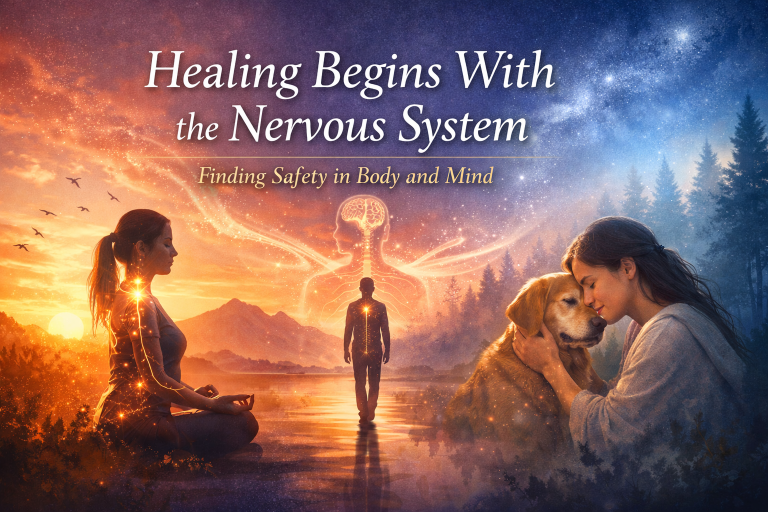
Why True Recovery Requires Safety in the Body
In modern wellness culture, healing is often reduced to checklists.
Eat clean.
Take supplements.
Sleep eight hours.
Drink more water.
Meditate.
Exercise.
While these habits matter, many people follow them diligently and still feel exhausted, anxious, inflamed, or stuck in cycles of illness. They wonder why their body refuses to recover even though they are “doing everything right.”
The missing piece in most healing conversations is the nervous system.
Healing cannot happen in a body that feels unsafe.
No matter how perfect your diet or lifestyle may be, if your nervous system remains locked in survival mode, your body will prioritize protection over repair. Real healing begins when the body shifts from fight-or-flight into safety.
The Nervous System: The Gatekeeper of Healing
Your nervous system is constantly asking one fundamental question:
Am I safe?
If the answer is no, the body activates survival mechanisms.
This survival response—commonly called fight-or-flight—is controlled by the sympathetic branch of the autonomic nervous system. When this system is activated, your body prepares for immediate action:
-
Heart rate increases
-
Muscles tense
-
Digestion slows
-
Stress hormones surge
-
Immune activity changes
-
Blood flow shifts away from repair processes
This response is extremely useful in genuine danger. It helps humans run from predators, react quickly, and survive acute threats.
But modern life has created a different kind of challenge.
Instead of occasional danger, many people experience constant low-grade stress:
deadlines, financial pressure, digital overload, unresolved trauma, social comparison, and emotional instability.
The nervous system interprets these signals as ongoing threat.
When that happens, the body never fully returns to its healing state.
Why Healing Requires “Rest and Repair”
The opposite of fight-or-flight is the parasympathetic nervous system, sometimes called the rest-and-digest state.
This is the physiological environment where healing actually occurs.
When the parasympathetic system is active:
-
Digestion improves
-
Inflammation decreases
-
Tissue repair increases
-
Hormones rebalance
-
Immune function stabilizes
-
Cellular regeneration begins
In simple terms:
The body repairs itself when it feels safe.
Without that sense of safety, the body conserves energy for survival instead of investing it in restoration.
This is why people can eat the cleanest diet in the world and still experience chronic fatigue, gut issues, anxiety, hormonal disruption, or slow recovery from illness.
The nervous system determines whether healing is allowed to happen.
Adults Often Try to Regulate the Mind First
When people attempt to calm themselves, they usually start with thoughts.
They try to reason with their stress:
“Everything is fine.”
“I shouldn’t feel this way.”
“I just need to relax.”
But the nervous system doesn’t respond primarily to logic.
It responds to physiological signals.
Safety is communicated through the body, not through intellectual understanding.
This is why the most effective methods for regulating the nervous system start with physical sensation rather than mental analysis.
The Body Is the Doorway Back to Safety
One of the most powerful ways to regulate the nervous system is intentional breathing.
Breath is unique because it sits at the intersection of the conscious and unconscious systems. By changing the rhythm of the breath, we can directly influence the nervous system.
Practices such as 4-7-8 breathing or simply extending the exhale signal the brain that danger has passed.
Longer exhales activate the parasympathetic system and begin shifting the body away from survival mode.
Even a few minutes of slow breathing can reduce stress hormones and lower heart rate variability associated with chronic stress.
The breath is one of the fastest ways to communicate safety to the nervous system.
Grounding the Body in the Present Moment
Another powerful tool is grounding.
When the nervous system is dysregulated, attention tends to drift toward imagined threats or past memories. Grounding techniques help bring awareness back into the body and the present moment.
Simple practices can be surprisingly effective:
-
Pressing the feet firmly into the floor
-
Holding something cold in the hands
-
Touching textured surfaces
-
Feeling the weight of the body in a chair
These physical sensations provide immediate feedback to the brain that the body is here, now, and not under attack.
This interrupts the cycle of internal threat signals.
Movement Releases Stored Stress
The body stores tension when survival responses cannot be completed.
In nature, animals discharge stress through movement. After escaping danger, many animals literally shake their bodies to release residual adrenaline and muscular tension.
Humans often suppress this natural release.
Gentle movement helps restore balance to the nervous system.
Activities like:
-
Walking slowly
-
Stretching
-
Shaking out the arms and legs
-
Crawling movements
-
Light yoga
can help discharge stored tension and reestablish fluid movement patterns within the body.
Movement signals to the nervous system that the threat response has been completed.
Stimulating the Vagus Nerve
A key pathway for nervous system regulation is the vagus nerve.
This large cranial nerve connects the brain to the heart, lungs, and digestive system, and plays a central role in activating the parasympathetic state.
Several simple actions stimulate the vagus nerve:
-
Humming
-
Singing
-
Gargling
-
Splashing cold water on the face
-
Slow breathing
These activities create vibrations and pressure changes that activate vagal pathways and promote relaxation.
This is one reason why chanting, prayer, and sacred sound practices appear across spiritual traditions worldwide. Long before neuroscience understood the vagus nerve, ancient cultures intuitively discovered methods that calm the nervous system through sound and breath.
The Importance of Rhythm and Routine
The nervous system thrives on predictable rhythms.
When life becomes chaotic—irregular sleep schedules, inconsistent meals, erratic work patterns—the body cannot anticipate what comes next.
This unpredictability increases stress.
Establishing consistent rhythms helps communicate safety to the body.
Key rhythms include:
-
Going to bed at the same time each night
-
Eating meals at regular intervals
-
Creating predictable daily routines
-
Establishing morning and evening rituals
Over time, these patterns help retrain the nervous system to expect stability.
Stability allows the body to move out of constant vigilance.
Healing Happens in Connection
Human nervous systems are not designed to regulate alone.
We are biologically wired for co-regulation.
This means our nervous systems calm down when we experience safe connection with others.
Simple interactions can shift the nervous system toward safety:
-
A genuine conversation with a trusted friend
-
Eye contact and laughter
-
Physical touch
-
Sitting quietly with someone who feels safe
Even animals provide this benefit.
Many people notice their breathing slows and their body relaxes when they sit with a pet. The presence of another living being can help the nervous system exit survival mode.
Connection is medicine.
Why Modern Life Dysregulates the Nervous System
Modern environments are often profoundly dysregulating.
Constant notifications, information overload, artificial lighting, and endless productivity pressures keep the nervous system in a low-level alert state.
The body evolved for cycles of effort and rest.
But modern culture often eliminates the rest phase.
Without deliberate practices that restore nervous system balance, stress accumulates and eventually manifests as physical or emotional symptoms.
Healing therefore requires more than isolated wellness habits.
It requires creating an environment of safety for the nervous system.
The Foundation of Every Healing System
Interestingly, many ancient traditions emphasized nervous system regulation long before modern neuroscience.
Practices such as:
-
Yoga
-
Meditation
-
Chanting
-
Breathwork
-
Ritual
-
Slow walking
all influence the autonomic nervous system.
These traditions recognized a simple truth:
A calm body heals more effectively.
Modern science is now rediscovering what these traditions preserved for centuries.
Healing Is a State, Not Just a Strategy
Ultimately, healing is not just something we do.
It is a state the body enters.
You cannot force the body to repair itself through discipline alone. But you can create conditions that allow healing to unfold naturally.
Those conditions begin with safety.
Safety in breath.
Safety in movement.
Safety in rhythm.
Safety in connection.
When the nervous system learns that the world is no longer dangerous, the body begins to shift.
Digestion improves.
Sleep deepens.
Energy returns.
Inflammation decreases.
The body remembers how to heal.
Returning to the Body’s Natural Intelligence
The human organism is remarkably intelligent.
Given the right conditions, it constantly moves toward balance.
But healing does not start with supplements, protocols, or optimization strategies.
It starts with something much simpler.
Slowing down enough for the nervous system to feel safe again.
When that shift happens, the body moves out of survival mode and into restoration.
And once the body enters that state, healing is no longer something you have to chase.
It begins to happen on its own.