
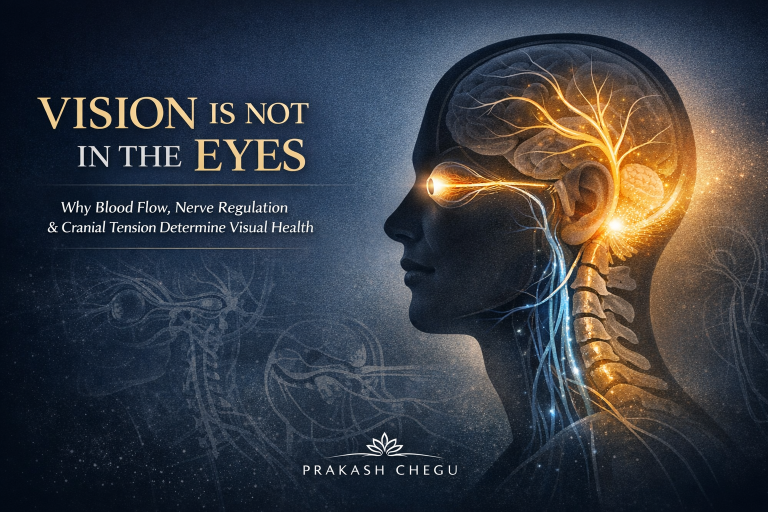
We were taught to believe that vision lives inside the eyeballs.
If sight declines, we look at the retina.
If pressure rises, we look at the fluid.
If focus blurs, we blame age.
But what if the eyes are not the problem?
What if vision is part of a much larger vascular and neurological symphony — and when that orchestra loses rhythm, the eyes are simply the first violin to squeak?
Vision is not an isolated organ.
It is a circulatory, neurological, and structural event happening in real time.
And when that system becomes congested, compressed, or dysregulated — sight changes.
The Hidden Architecture of Seeing


Your eyes are among the most metabolically active tissues in the body.
They require:
-
Continuous oxygen delivery
-
Precise arterial pressure
-
Efficient venous drainage
-
Stable autonomic nerve regulation
When any of these falter, visual clarity suffers.
And here is the crucial piece:
If venous outflow from the eye is impaired, pressure increases.
When blood cannot drain efficiently:
-
Internal eye pressure rises
-
Arteries remain tense
-
Microcirculation becomes sluggish
-
Nerves receive less nourishment
No amount of eye drops can correct a drainage issue upstream.
You can lubricate the surface.
You can supplement antioxidants.
But if the plumbing system is congested, the pressure remains.
The Neck–Skull–Jaw Axis: The Overlooked Culprit
Most disruptions in ocular circulation are not originating inside the eye.
They are structural.
Tension in:
-
The upper cervical spine
-
The base of the skull (occiput)
-
The jaw (TMJ)
-
The small circular muscles around the eyes
…can subtly compress vascular and neural pathways.
Stress tightens the jaw.
Poor posture shortens the neck.
Clenching alters cranial alignment.
Forward head posture narrows venous return channels.
And slowly, pressure builds.
This is not dramatic.
It is gradual.
Cumulative.
You may not notice until:
-
Eyes feel tired constantly
-
Vision fluctuates
-
There is subtle pressure behind the eyes
-
Light sensitivity increases
-
Focus becomes harder at the end of the day
This is not “aging.”
It is congestion.
Why Working Only with the Eyes Is Incomplete
Most vision care focuses on:
-
Corrective lenses
-
Drops
-
Surgery
-
Supplements
But imagine trying to fix a river’s stagnation by polishing the surface water.
If the drainage channels are narrowed, the system remains stressed.
Vision improves when:
✔ Venous outflow is restored
✔ Arterial tension softens
✔ Autonomic balance stabilizes
✔ Cranial structures decompress
The eyes thrive in a relaxed, rhythmic system.
They struggle in a braced one.
Stress, Autonomic Tone & Visual Decline
Vision is deeply linked to the nervous system.
Under chronic stress:
-
Sympathetic tone increases
-
Blood vessels constrict
-
Jaw muscles tighten
-
Suboccipital muscles harden
This creates a subtle but persistent vascular compression at the base of the skull — exactly where many ocular vessels and nerves pass.
You cannot separate eyesight from your stress physiology.
A dysregulated nervous system will eventually affect visual performance.
Which means vision care must include:
-
Breath regulation
-
Jaw release
-
Cervical mobility
-
Cranial decompression
-
Parasympathetic activation
Without these, treatment is partial.
The Circular Eye Muscles & Micro-Drainage

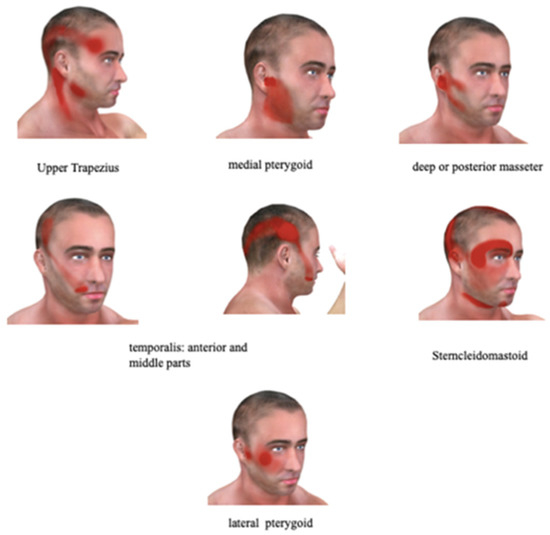

The orbicularis oculi — the circular muscle surrounding the eye — is often chronically contracted.
From screen use.
From stress.
From concentration.
When this muscle remains tight:
-
Micro-venous return slows
-
Lymphatic drainage reduces
-
Surface circulation stagnates
Releasing this muscle gently can improve:
-
Fluid exchange
-
Oxygenation
-
Neural comfort
-
Visual fatigue
Small shifts in circulation create large shifts in clarity.
Integrated Vision Restoration: A Whole-System Approach
If we approach vision as a systems issue rather than a local defect, the strategy changes.
1. Release the Jaw
Clenching alters cranial tension.
Tongue position influences cervical alignment.
Jaw relaxation improves venous pathways.
2. Mobilize the Upper Neck
Gentle cervical mobility restores blood flow dynamics.
3. Decompress the Occiput
Soft tissue release at the skull base improves nerve conduction and vascular drainage.
4. Activate the Parasympathetic System
Slow nasal breathing.
Extended exhale.
Humming (stimulates vagus nerve).
When vessels relax, circulation improves.
5. Gentle Eye Mobility Practices
Not aggressive exercises — but soft tracking, peripheral awareness, and relaxation-based eye movements.
The goal is not muscular strengthening.
The goal is circulation and regulation.
Vision as a Reflection of System Integrity
Your eyes are not failing you.
They are reporting.
They are telling you:
-
There is tension somewhere.
-
There is congestion somewhere.
-
There is compression somewhere.
-
There is stress somewhere.
When we restore systemic flow, vision often stabilizes.
Not because we “fixed the eye.”
But because we restored harmony.
A Final Reframe
Vision is not a camera.
It is a living, breathing, vascular, neural conversation between your brain, blood, bones, and breath.
If venous outflow improves, pressure normalizes.
If pressure normalizes, arteries relax.
If arteries relax, nerves receive nourishment.
If nerves are nourished, vision stabilizes.
The eyes are part of a larger intelligence.
Treat the system — and the eyes often follow.