
The way you move your eyes, head, and neck is not just about vision or posture. These subtle movements play a quiet but powerful role in the health of your central nervous system, particularly in how cerebrospinal fluid (CSF) circulates around the brain and spinal cord.
Modern anatomy and neuroscience are beginning to illuminate what yogic and somatic traditions have long sensed: movement guides fluid, and fluid guides nervous system health.

Cerebrospinal Fluid: The Nervous System’s Lifeline
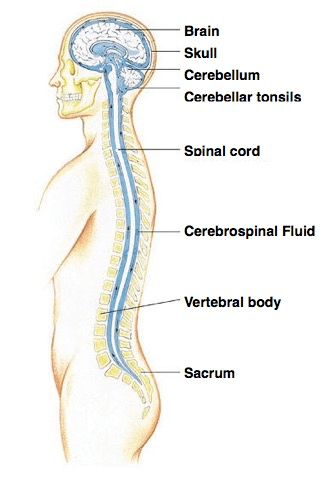
Cerebrospinal fluid is a clear, nutrient-rich fluid that surrounds the brain and spinal cord. It serves several essential functions:
-
Cushions the brain and spinal cord from mechanical stress
-
Delivers nutrients and removes metabolic waste
-
Maintains optimal pressure within the craniospinal system
-
Supports electrical and biochemical signaling
Unlike blood, CSF does not rely on a heart-like pump. Its movement depends on breathing, spinal motion, posture, and subtle muscular activity—especially in the upper cervical region.
This is where the eyes, head, and neck become unexpectedly important.
The Myodural Bridges: Where Muscle Meets Nervous System
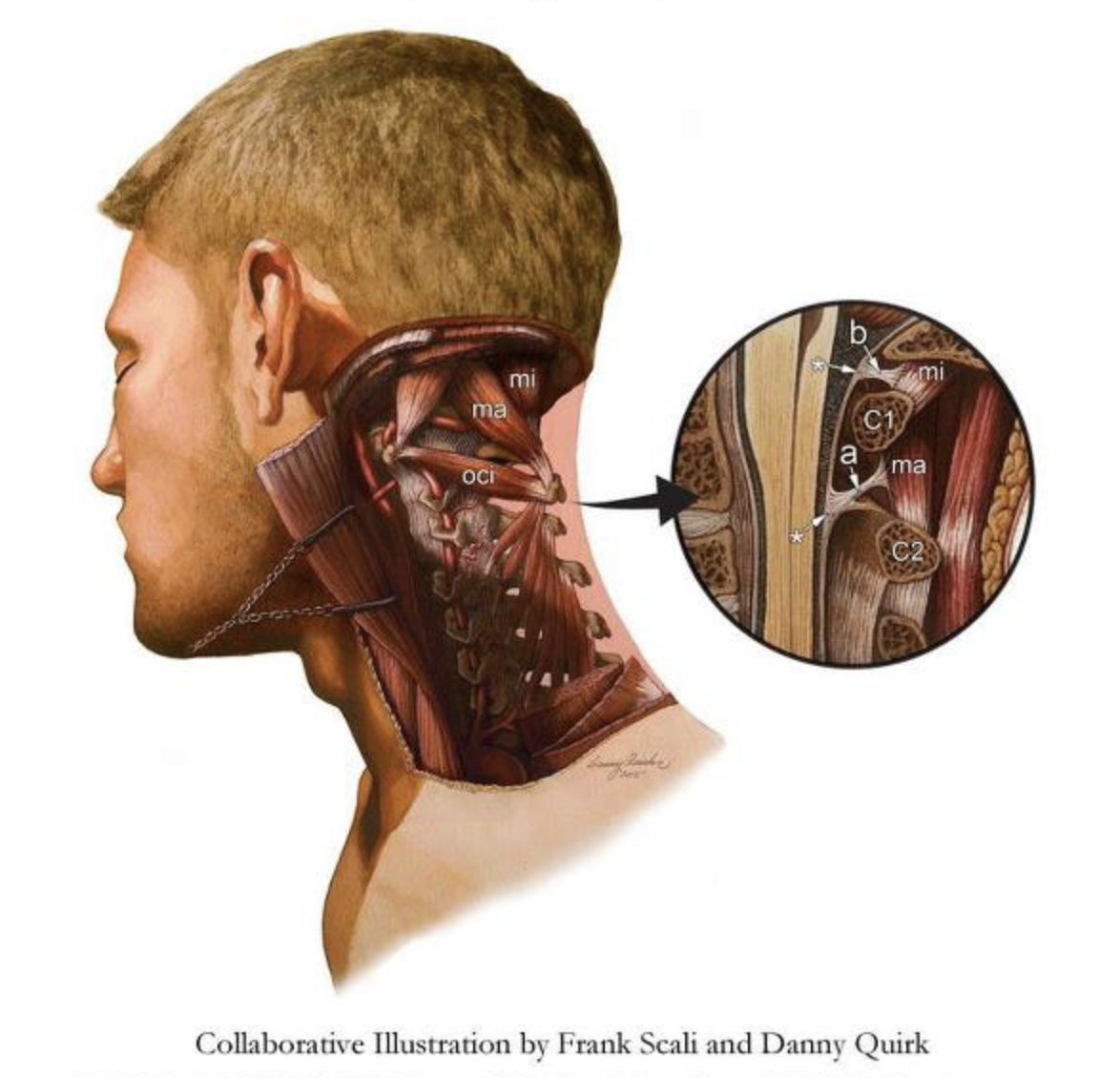
At the base of the skull lies a small but influential group of muscles called the suboccipital muscles. These muscles help control fine head movements and stabilize the junction between the skull and the top of the spine.
What makes them unique is their direct anatomical connection to the dura mater, the tough protective membrane surrounding the brain and spinal cord.
These connections are known as myodural bridges.
Why this matters:
-
The dura mater is not floating freely—it is mechanically influenced by muscular tension
-
When suboccipital muscles shorten, brace, or become chronically tight, they can transmit tension directly to the dura
-
When these muscles move fluidly and coordinately, they create gentle traction and release patterns that support healthy CSF flow
In simple terms: how you hold and move your head can affect the fluid environment of your brain.
Eye Movement Is Not Separate from Neck Movement
The eyes do not move in isolation. Eye movement is neurologically and mechanically linked to the muscles of the head and neck.
Every time your eyes track an object, shift focus, or scan space:
-
Small stabilizing muscles at the base of the skull subtly adjust
-
Neural pathways between the eyes, vestibular system, and cervical spine activate
-
The dura experiences micro-changes in tension and release
Coordinated eye–head–neck movement creates a gentle pumping and gliding effect through the craniospinal system.
This is one reason practices that involve conscious eye movement—when done slowly and safely—can feel calming, grounding, and clarifying to the nervous system.
CSF Flow, Tension, and the Upper Neck
When movement is limited or habitual patterns dominate—such as forward-head posture, excessive screen time, or chronic bracing—the suboccipital region often becomes compressed and overactive.
This can lead to:
-
Reduced dural mobility
-
Less efficient CSF circulation
-
Increased sensory noise in the nervous system
-
Headaches, neck stiffness, jaw tension, or a feeling of mental pressure
Restoring variation, coordination, and ease in eye, head, and neck movement helps normalize these relationships.
Importantly, this is not about forceful stretching or aggressive manipulation. CSF responds best to gentle, rhythmic, intelligent movement.
Why Subtle Movement Has a Big Impact
The nervous system is exquisitely sensitive. Small changes in pressure, tension, and fluid dynamics can influence:
-
Parasympathetic (rest-and-digest) activation
-
Clarity of thought and emotional regulation
-
Pain perception and sensory integration
This is why slow, mindful practices often feel disproportionately powerful. They work with the nervous system rather than attempting to override it.
In yogic and somatic traditions, this understanding shows up as:
-
Eye-focused meditations
-
Micro-movements of the cervical spine
-
Practices that synchronize gaze, breath, and posture
Modern anatomy now provides a structural explanation for why these practices are effective.
A Nervous System That Can Breathe and Flow
Healthy CSF circulation is not something you “force.” It emerges when the system is allowed to move the way it was designed to move.
When the eyes are free to track,
when the head is balanced rather than braced,
when the neck is responsive rather than rigid,
the dura can glide,
the fluid can circulate,
and the nervous system can settle into coherence.
This is not optimization—it is remembrance.
Closing Reflection
Your nervous system is not separate from your movement. It is shaped by it.
Every gentle turn of the head,
every soft shift of the eyes,
every moment of reduced effort
is an invitation for the brain and spine to experience space, nourishment, and ease.
Sometimes healing doesn’t come from doing more.
It comes from moving less—but more intelligently.