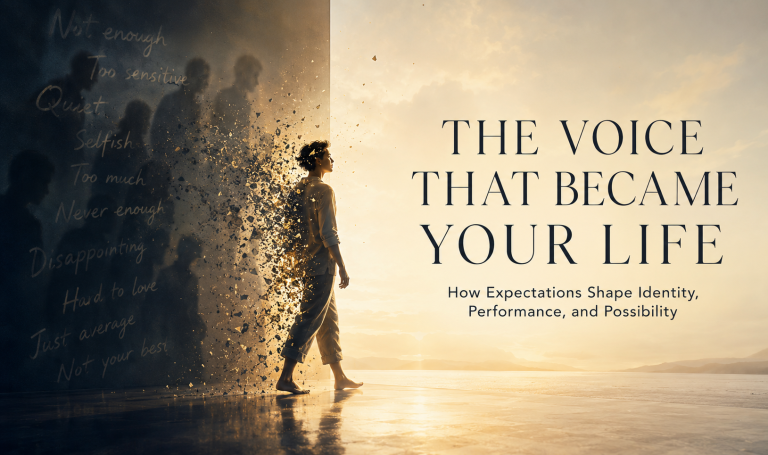
Flexibility is not the abandonment of form. True adaptability serves what is being built.
Someone recently asked me whether I am flexible. At another moment, the question arrived almost as a confrontation:
Can you adapt?
Yes, I can.
I have adapted to countries, cultures, communities, relationships, responsibilities, unexpected turns, and the changing seasons of life. I have begun again more than once. I have listened, learned, altered plans, softened my approach, and changed direction when a deeper intelligence asked me to.
But perhaps the more important question is this:
Must flexibility always mean bending?
I do not believe it does.
There is no need to bend merely to prove that you are flexible when you are devoted to building something real.
The Modern Worship of Flexibility
We live in a culture that praises adaptability. In principle, this is wise. Life changes. People are different. Plans fail. Timing shifts. Anyone who refuses to learn, listen, or respond will eventually become trapped inside their own certainty.
But the word flexible is often used carelessly.
Sometimes, “Can you be flexible?” means:
- Will you reconsider the method while protecting the purpose?
- Can you make room for another person’s needs?
- Are you able to receive new information?
- Can you distinguish a preference from a principle?
Those are worthy questions.
At other times, however, it means:
- Will you abandon a boundary because it inconveniences me?
- Will you reduce your standards so I do not have to rise?
- Will you accept ambiguity where you asked for clarity?
- Will you betray your own rhythm to accommodate my inconsistency?
- Will you call self-erasure compassion?
That is not flexibility. It is displacement.
It asks one person to move continually while the other remains exactly where they are.
Discipline Is Not Rigidity
I am disciplined. I value clarity, consistency, responsibility, devotion, and follow-through. But discipline does not make a person cold, controlling, or incapable of change.
True discipline is not the refusal to move. It is the ability to keep moving in service of what matters.
A river is flexible. It curves around stone, changes speed, widens, narrows, and finds new paths. Yet it does not forget that it is moving toward the ocean.
A musician adapts within a rāga, but does not discard the scale and call the result freedom. A yogi may modify a posture, but does not confuse modification with the absence of practice. An architect may revise a doorway or move a wall, but does not casually remove the foundation.
Form does not always limit freedom. Sometimes form is what allows freedom to become creative rather than chaotic.
Discipline gives kindness a container. It allows promises to become dependable, intentions to become actions, and love to become something more substantial than a feeling.
Kindness Does Not Require Self-Abandonment
I believe in kindness. I believe in compassion. I believe in listening beyond the words a person uses and trying to understand the need, fear, history, or longing beneath them.
But kindness without discernment can become permission for disorder.
Compassion does not mean agreeing with everything. It does not require us to make every boundary negotiable or to remain endlessly available to what diminishes us. A compassionate “no” may carry more love than a resentful “yes.” A clear boundary can be kinder than prolonged ambiguity.
The deepest kindness does not ask:
How do I avoid disappointing anyone?
It asks:
What response serves truth, dignity, and growth—for everyone involved?
Sometimes that response is soft. Sometimes it is firm. Often it is both.
A Tree Bends—but It Also Builds
The familiar teaching says that the tree which bends survives the storm. There is wisdom in that. A tree with no capacity to yield may break.
But that is only half the teaching.
The tree can bend because it has spent years building roots.
Its flexibility is supported by structure. Its movement is possible because it is anchored. It does not tear itself from the earth to demonstrate openness to the wind.
And while its branches respond to every season, the tree continues its deeper work: sending roots further into the ground, strengthening its trunk, forming new rings, reaching toward light, and preparing fruit.
This is the kind of flexibility I value—not flexibility without a centre, but responsiveness rooted in purpose.
The question is not simply, Can you bend?
The question is:
What are you rooted in, and what are you building?
Building Requires Selection
To build anything meaningful—a spiritual practice, a body of work, a family, a community, a relationship, or a life—one must select.
Every enduring creation is shaped as much by what it excludes as by what it includes.
A house needs walls as well as doors. A sacred space needs a threshold. A relationship needs agreements. A practice needs repetition. A vision needs priorities. Without these, energy disperses.
Selection is not rejection. Structure is not punishment. Boundaries are not an absence of love.
They are ways of telling life:
This is what I am available to create.
If every decision remains endlessly open, nothing gathers enough strength to take form. If every value changes under pressure, trust cannot grow. If every foundation is negotiable, the building never rises.
There comes a time when keeping every possibility open is no longer freedom. It is avoidance.
Building asks us to close certain doors—not because the rooms behind them are bad, but because we have chosen where we are going to live.
Adapt the Method, Not the Integrity
Mature adaptability begins by knowing the difference between the essential and the adjustable.
The timing may change; the commitment need not.
The route may change; the destination may remain.
The language may change; the truth does not have to.
The plan may be revised; the purpose can deepen.
The form of a relationship may evolve, but respect, honesty, and reciprocity do not become optional.
This distinction is vital. Without it, we either become rigid about trivial things or careless with sacred things.
Rigidity insists that everything must happen one way. Rootedness knows why something matters and is willing to discover many ways of honouring it.
I can alter my approach. I can learn a new language, reconsider an assumption, accommodate a genuine need, change a schedule, and admit when I am wrong. I can make space for another person without requiring them to become a copy of me.
But adaptation should make the structure more alive—not quietly dismantle it.
Are We Building Together?
This question becomes particularly important in relationships and collaborations.
When two people are building together, flexibility is mutual. Both listen. Both adjust. Both take responsibility. Both protect the shared creation.
One person may carry more for a season, but it does not become the permanent architecture of the relationship. Compromise is not always calculated in equal portions, yet reciprocity remains visible over time.
If one person is always asked to bend while the other merely benefits, they are not building together.
One is building; the other is occupying the structure.
The right question, then, is not only:
“Will you adapt to me?”
It is:
What are we creating, and what is each of us willing to contribute to its creation?
That question changes everything. It shifts the conversation from accommodation to participation, from personal convenience to shared purpose.
Flexibility Without Direction Becomes Drift
There is a form of flexibility that looks peaceful but is actually fear: fear of conflict, fear of disapproval, fear of losing someone, fear of being called difficult.
So we keep bending.
We revise what we said mattered. We silence what we know. We postpone necessary conversations. We allow our boundaries to be interpreted as opening offers. Eventually, we become so adaptable that we are no longer recognisable to ourselves.
This is not surrender in the spiritual sense.
Sacred surrender is not passivity. It is the release of egoic control into a deeper order. It makes us more truthful, not less. It does not ask us to abandon discernment.
A person without a centre can be moved by every mood, demand, attraction, and opinion.
That is not flow. That is drift.
Real flow has direction.
The Courage to Remain Upright
There are times when bending is wise. There are times when yielding prevents unnecessary struggle. There are also times when the most loving, conscious, and responsible act is to remain upright.
To remain upright does not mean becoming hard.
It means staying connected to the inner axis around which your life is organised. It means refusing to trade long-term integrity for short-term harmony. It means allowing another person to dislike your boundary without turning their discomfort into evidence that the boundary is wrong.
Not every accusation of rigidity is accurate. Sometimes it is simply the reaction of someone who expected access where they encountered a threshold.
Still, we must remain honest with ourselves. A principle can become an excuse. Discipline can hide fear. Certainty can protect us from intimacy. We should be willing to examine our foundations and ask whether they are rooted in wisdom or merely defended by habit.
But examination is not demolition.
Self-awareness does not require us to doubt every conviction. It helps us distinguish a living value from a protective wall.
Do You Bend—or Do You Build?
Perhaps this is not an either-or question. A conscious life needs both.
We bend in the branches so we do not break in every storm. We build in the roots so the wind does not decide where we belong.
We adapt the plan while remaining faithful to the purpose. We soften our communication without diluting our truth. We make room for love without evicting ourselves. We listen deeply, change sincerely, and stay willing to grow.
But we do not bend merely because someone is uncomfortable with the shape of our integrity.
I am flexible where flexibility allows life to breathe. I am disciplined where discipline protects what is sacred. I can be kind without becoming unclear, compassionate without becoming compliant, and open without becoming unrooted.
Because my life is not an endless exercise in proving how far I can bend.
I am here to build.
And what is built with clarity, devotion, kindness, and truth does not need to be rigid.
It needs to be rooted.
Questions for Reflection
Before asking whether you should bend, pause and ask:
- Is this a preference I can release, or a principle I must honour?
- Does this adjustment support what we are building, or slowly dismantle it?
- Is the flexibility mutual?
- Am I responding from compassion, or from fear of disapproval?
- What would kindness with clarity look like here?
The answer may ask you to soften. It may ask you to change. Or it may ask you, with equal wisdom, to stand exactly where you are.
Frequently Asked Questions
Is not being flexible always a good thing?
Flexibility is genuinely valuable. I have adapted to countries, cultures, relationships and unexpected turns, and begun again more than once when a deeper intelligence asked me to. But the more important question is whether flexibility must always mean bending. Endless yielding is not the only form adaptability can take.
What is the difference between bending and building?
Bending yields your form to pressure; building adapts while keeping, even strengthening, your form. Flexibility is not the abandonment of form. A tree that only bends eventually breaks or loses its shape; one that is both rooted and supple survives the storm. The goal is not to be endlessly pliable, but to adapt without dissolving who you are.
How do I know when to bend and when to hold firm?
By distinguishing surface from foundation. Plans, approaches, timing and methods can and should flex readily. But your core values and deeper direction are the form worth keeping. Bend on the how; build on the what. When adapting would mean abandoning something essential, that is the moment flexibility has crossed into losing yourself.