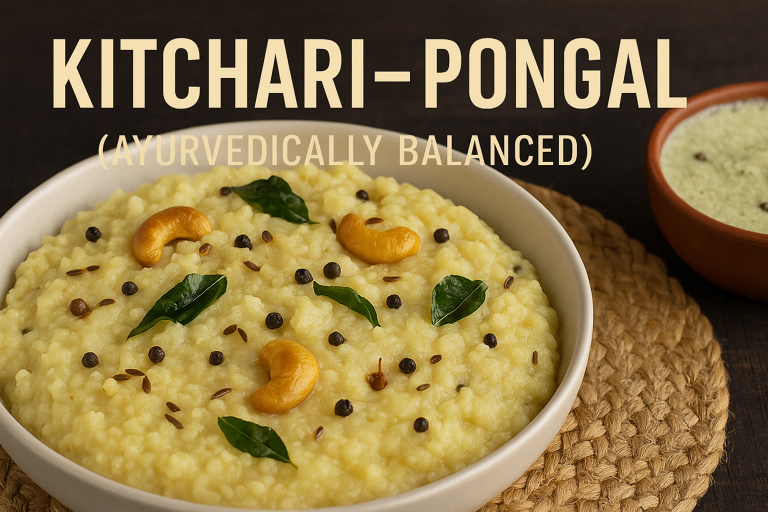
Ayurvedically Balanced | Sattvic | Digestive-Friendly
Essence of This Dish (Ayurvedic View)
Vata-pacifying: Warm, soft, moist, mildly spiced
Pitta-soothing: No onion/garlic, gentle spices
Kapha-aware: Correct grain–lentil ratio, ginger, pepper, cumin
Best time to eat: Breakfast or lunch
Ideal season: Monsoon, winter, post-fasting days, Ekadashi break (with mung option)
🧂 INGREDIENTS (Serves 3–4)
Base
Raw rice (Sona Masuri preferred) – ½ cup
Split yellow moong dal (dhuli moong) – ¼ cup
Water – 4 to 4½ cups
Rock salt (Saindhava) – to taste
Tempering (Tadka)
Cow ghee – 2½ tbsp
Whole cumin seeds – 1½ tsp
Whole black peppercorns (slightly crushed if desired) – 1½ tsp
Fresh ginger (very finely grated) – 1½ tsp
Curry leaves – 10–12
Cashew halves – 8–10 (optional)
Optional Karnataka Touch
Fresh coconut gratings – 1–2 tbsp (optional, not for Kapha excess)
🔥 STEP-BY-STEP PROCESS
1️⃣ Wash & Soak (Agni Preparation)
Wash rice and moong dal together 3 times until water runs clear.
Soak for 20–30 minutes.
👉 Why Ayurveda approves: Soaking reduces heaviness (guru guna) and improves digestibility.
2️⃣ Dry Roast the Moong Dal (Key Karnataka Step)
Drain and dry-roast moong dal on low flame until:
Aroma becomes nutty
Dal turns light golden
Do not brown.
👉 This step is essential.
It removes excess Kapha quality and prevents bloating.
3️⃣ Pressure Cook to Softness
Add soaked rice + roasted dal to cooker.
Add water + rock salt.
Cook:
Pressure cooker: 3 whistles on medium
Open pot: 35–40 mins (stir occasionally)
Final texture:
Soft, mashed, flowing—not grainy
👉 Pongal should feel like a warm porridge, not pulao (flavored rice).
4️⃣ Ayurvedic Tempering (Heart of Pongal)
Heat ghee on low–medium flame.
Add in order:
Cashews → golden
Cumin seeds → crackle
Crushed pepper
Ginger
Curry leaves (stand back, because it will splatter)
Turn off heat immediately once aromatic.
👉 Never burn pepper or cumin — bitterness disturbs Pitta.
5️⃣ Combine & Balance
Pour tempering over cooked pongal.
Mix gently, adding:
Hot water(only if needed)
Optional coconut (very small quantity)
Taste and adjust salt.
Rest covered 5 minutes before serving.
🍽️ SERVING (Traditional + Ayurvedic)
Serve hot with:
Coconut chutney (light, ginger-forward)
Or plain ghee drizzle
Or thin pepper rasam (excellent for digestion)
Avoid:
Sambar (too heavy with pongal)
Cold chutneys straight from fridge
🌿 DOSHA-WISE MODIFICATIONS
🟢 VATA (Dryness, anxiety, fatigue)
Increase ghee slightly
Add pinch of asafoetida (hing) to tadka
Keep texture very soft
🔴 PITTA (Heat, acidity)
Reduce pepper by 25%
Add fennel powder (¼ tsp) to cooking water
Avoid cashews
🔵 KAPHA (Heaviness, lethargy)
Use ⅓ cup rice + ⅓ cup moong
Add extra ginger + pepper
Skip coconut and cashews
Eat smaller portion
🌙 SATTVIC FASTING / EKADASHI OPTION
Replace rice with samai (little millet) or varagu
Use only moong dal
Add cumin + ginger + ghee only
No pepper if fasting strictly
🧠 WHY THIS PONGAL HEALS
✔ Rebuilds gut lining
✔ Stabilizes blood sugar
✔ Nourishes nervous system
✔ Ideal during stress, grief, or recovery
✔ Grounds prana and calms the mind
Kitchari is medicine.
Pongal is nourishment.
Kitchari–Pongal is conscious nourishment.
Is This Kitchari or Pongal?
Technically, it is closer to pongal in taste and technique, but prepared with the digestive intelligence of kitchari. This makes it ideal for daily eating, seasonal resets, and gentle healing without full detox.