Yawning is one of the most misunderstood physiological responses.
People assume it means boredom or sleepiness, but in spiritual practice—meditation, healing sessions, breathwork, sound baths—yawning becomes something entirely different.
It becomes a diagnostic tool for the nervous system,
a release valve for stored tension,
a sign of energetic recalibration…
and yes, sometimes… simply a sign that you need more sleep.
This blog unpacks the four major types of yawning, how to tell them apart, and how to honor the messages they carry.
1. Yawning During Meditation: The Parasympathetic Reset
This is the most common type people ask about.
What’s actually happening?
Meditation shifts you from sympathetic arousal (“fight–flight–think–do”) into parasympathetic activation (“rest–digest–heal–repair”).
This transition triggers yawning through:
✨ Vagus Nerve Activation
When you yawn, the throat, jaw, and neck stretch—directly stimulating the vagus nerve, the master regulator of the parasympathetic nervous system.
-
heart rate slows
-
blood pressure drops
-
breath deepens
-
mental tension dissolves
It’s not boredom.
It’s deep relaxation coming online.
✨ Oxygen Rebalancing
As your breath slows naturally during meditation, your brain may temporarily sense an oxygen–CO₂ mismatch.
Yawning rapidly:
-
increases oxygen intake
-
clears excess CO₂
-
stabilizes breathing rhythm
Your body is simply recalibrating.
✨ Dopamine & Serotonin Release
Yawning stimulates the hypothalamus and hippocampus, increasing:
-
dopamine (motivation + pleasure)
-
oxytocin (connection + calm)
-
serotonin (mood regulation)
Simultaneously, cortisol drops, reducing stress-hormone load.
No wonder meditation feels so soothing afterward.
✨ Brain Cooling & Adenosine Clearing
Yawning cools the brain and moves cerebrospinal fluid—reducing adenosine, the compound that creates sleepiness.
This allows you to stay alert within deep relaxation.
✨ Energetic & Yogic Meaning
From a yogic perspective, yawning can signal:
-
energy unblocking in the face/jaw/neck
-
release of subconscious tension
-
downward-moving energy (apana) being cleared so prana can rise
-
your awareness trying to shift upward to the spiritual eye, but the residual downward pull of the subconscious is still active
Yogananda taught that yawning during meditation can occur when:
-
energy is dropping downward rather than flowing up the spine
-
posture/diaphragm is restricted
-
breath is shallow
A simple correction—align the spine, expand the chest, and lift the inner gaze to the spiritual eye—often reduces yawning instantly.
BOTTOM LINE:
Yawning in meditation usually means your body is descending into deep rest, releasing tension, and resetting your nervous system.
It is a sign your practice is working, not failing.
2. Yawning During Healing Sessions, Energy Work & Sound Baths
This type of yawning is very different.
It is not oxygen-related.
It is not sleepiness.
It is not boredom.
It is energetic detoxification.
Why you yawn during healing modalities:
1. Emotional Energy Release
When stagnant emotional patterns move (grief, tension, suppressed anger, fear), the jaw and diaphragm release first.
Yawning acts like a pressure valve for energetic overload.
2. Trauma Discharge Response
Somatic therapies observe yawning as a sign of:
-
trauma leaving the system
-
parasympathetic dominance re-establishing
-
frozen sympathetic patterns dissolving
This is similar to trembling or sighing, but more subtle and socially acceptable.
3. Vagal Reset
During Reiki, breathwork, or sound baths, the vagus nerve is often being stimulated through:
-
frequency
-
chanting
-
resonance
-
nervous system attunement
Yawning is the body’s way of saying:
“We are shifting into healing mode.”
4. Energetic Unblocking in the Upper Chakras
Yawning corresponds to opening in:
-
throat chakra
-
jaw (often linked with suppressed expression)
-
vagal pathways
-
cranial plates
In sound healing, the vibration literally loosens energetic debris, and yawning is the release mechanism.
BOTTOM LINE:
Yawning in healing = energetic detox + nervous system reset + emotional release.
This is one of the most positive signs of progress.
3. Yawning Because You’re Sleepy, Bored, or Fatigued
This is the type most people know—but it is actually the least interesting.
This yawning appears when:
-
adenosine (sleep pressure hormone) builds up
-
brain temperature increases
-
mental engagement decreases
-
circadian rhythms shift into rest mode
Unlike meditative or healing yawns, this one:
-
has no emotional component
-
does not release tension
-
does not stimulate the vagus nerve profoundly
-
does not clear energetic blocks
-
does not enhance parasympathetic tone
It is simply your body requesting sleep, glucose, or stimulation.
4. Empathic or Contagious Yawning
This type reveals something profound about your wiring.
Contagious yawning is linked to:
-
mirror neuron activity
-
empathy circuits
-
social bonding
-
nervous system co-regulation
Healers, empaths, and sensitives often yawn more in community settings because they naturally attune to others’ emotional states.
Yogananda described this as “hypersensitivity”—not a weakness, but an innate spiritual gift.
Used correctly, this sensitivity becomes a tool for:
-
perceiving subtle energy
-
detecting dysregulation in others
-
heightened intuition
-
accessing inner guidance
How to Tell Which Yawn You’re Experiencing
| Type of Yawn | Cause | Sensations | Meaning |
|---|---|---|---|
| Meditation Yawn | Parasympathetic activation, oxygen reset | relief, softening, grounding | nervous system is relaxing |
| Healing/Sound Bath Yawn | Energetic release, vagal stimulation | warmth, tingling, waves of emotion | trauma/emotion moving out |
| Sleep/Fatigue Yawn | Adenosine buildup, brain heat | heaviness, droopy eyes | need rest or fuel |
| Empathic Yawn | Mirror neurons, co-regulation | syncing with others | high sensitivity, emotional attunement |
How to Work With Yawning in Spiritual Practice
1. Don’t resist it. Let the body release.
Suppressed yawns = suppressed energy.
2. Correct posture if yawning becomes excessive.
Straight spine
Open chest
Diaphragmatic breathing
Lift gaze toward the spiritual eye
3. Notice the emotional context.
-
Did yawning start after a specific thought?
-
During a tense moment?
-
At the start of a healing session?
Your yawns may be narrating your release process.
4. Use yawning as a reset cue.
Each yawn is an invitation to:
-
soften
-
drop resistance
-
expand awareness
-
deepen presence
5. In deep spiritual work, yawning is a sign of purification.
It is your system saying:
“I am clearing the way for higher consciousness.”
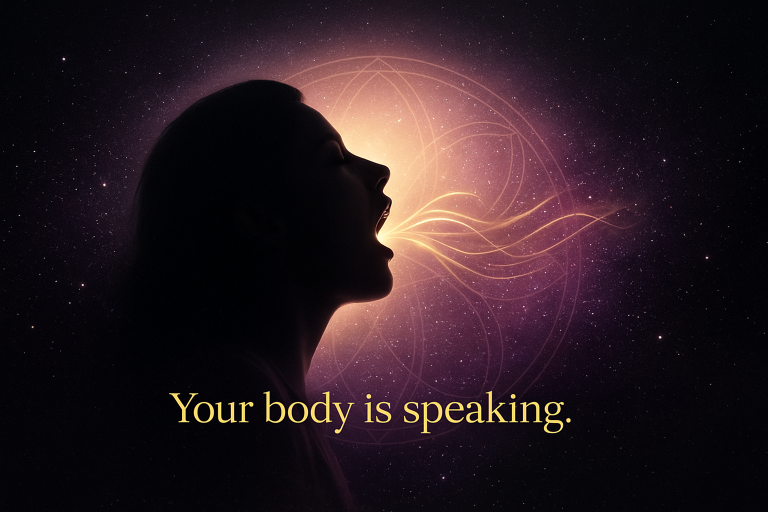
Final Thoughts: Yawning Is a Language—Your Body Is Speaking to You
Most people dismiss yawning as a nuisance.
But in meditation, healing, and spiritual practice, yawning is one of the clearest indicators of inner shift.
It reveals:
-
your nervous system’s state
-
your emotional release process
-
your energetic alignment
-
your level of sensitivity and attunement
-
your transition between subconscious and superconscious states
A yawn is not “just a yawn.”
It is a physiological, emotional, and energetic message.
Learning to interpret it transforms your practice.
If you’re yawning during meditation or healing sessions…
you’re not doing it wrong.
Your system is doing exactly what it’s meant to do.