
The Nights the Calendar Hides
Most people know Navaratri as a festival of color, drums, devotion, and community.
Very few know that twice each year, another Navaratri occurs—unannounced, uncelebrated, and deliberately concealed.
These are Gupta Navaratris: the hidden nine nights when time itself loosens, the veil between worlds thins, and the Divine Feminine reveals her most uncompromising forms.
No garba. No public rituals. No spectacle.
Only silence, discipline, and power.
What if the most important spiritual windows of the year were never meant to be seen—but entered?
1. The Architecture of Hidden Time
In the metaphysical framework of Sanātana Dharma, time (Kāla) is not linear. It is alive. It breathes, contracts, expands, and pulses according to lunar and solar rhythms. These rhythms are not equal. Some moments carry ordinary charge. Others carry high-voltage Shakti.
Public consciousness recognizes two Navaratris:
-
Chaitra Navaratri (spring)
-
Sharada Navaratri (autumn)
Yet beneath these visible pillars lies a deeper scaffolding—the Gupta Navaratris, occurring in:
-
Magha (January–February)
-
Ashadha (June–July)
These are not festivals of celebration but initiatory portals. They coincide with Ritu Sandhi—seasonal thresholds when material reality becomes porous. Just as dawn and dusk are potent for daily prayer, these seasonal twilights are considered fault lines in time through which tantric forces may be accessed with accelerated intensity.
Gupta Navaratri reframes Navaratri not as mythology—but as temporal technology.
1.1 The Philosophy of Secrecy
Gupta does not simply mean hidden. It means protected, sealed, and power-contained.
Tantric traditions preserve a cardinal rule:
“Gopayet Mātri-Jaravat” — Protect the practice like a secret lover.
Energy that is spoken leaks.
Energy that is displayed diffuses.
Energy that is held condenses into siddhi.
Unlike public Navaratris—marked by social rituals and collective joy—Gupta Navaratri is defined by:
-
Mauna (silence)
-
Anuṣṭhāna (unbroken discipline)
-
Inner retreat
It mirrors the seed beneath the soil—unseen, compressed, and preparing for irreversible transformation.
2. The Four Navaratris & the Cosmic Circuit
The Hindu year is stabilized by four Navaratris, two visible and two concealed.
| Navaratri | Lunar Month | Nature | Seasonal Axis | Core Function |
|---|---|---|---|---|
| Chaitra | March–April | Manifest | Spring Equinox | Creation, Sattva |
| Ashadha | June–July | Gupta | Summer Solstice | Power, Protection |
| Sharada | Sept–Oct | Manifest | Autumn Equinox | Destruction of Adharma |
| Magha | Jan–Feb | Gupta | Winter Solstice | Dissolution & Renewal |
The Gupta Navaratris flank the solstices—cosmic noon and cosmic midnight—moments of extreme potential when the universe itself is most vulnerable to reprogramming.
3. Magha Gupta Navaratri 2026 — The Winter Vigil

Seasonal Energy: Shishira Ritu (pre-spring dormancy)
This Navaratri unfolds as the Sun stabilizes in Capricorn and the earth holds its breath before renewal. Everything appears still—but potency is gathering underground.
Magha Gupta Navaratri is especially aligned with:
-
Hidden knowledge
-
Speech, mantra, and creativity
-
Subconscious purification
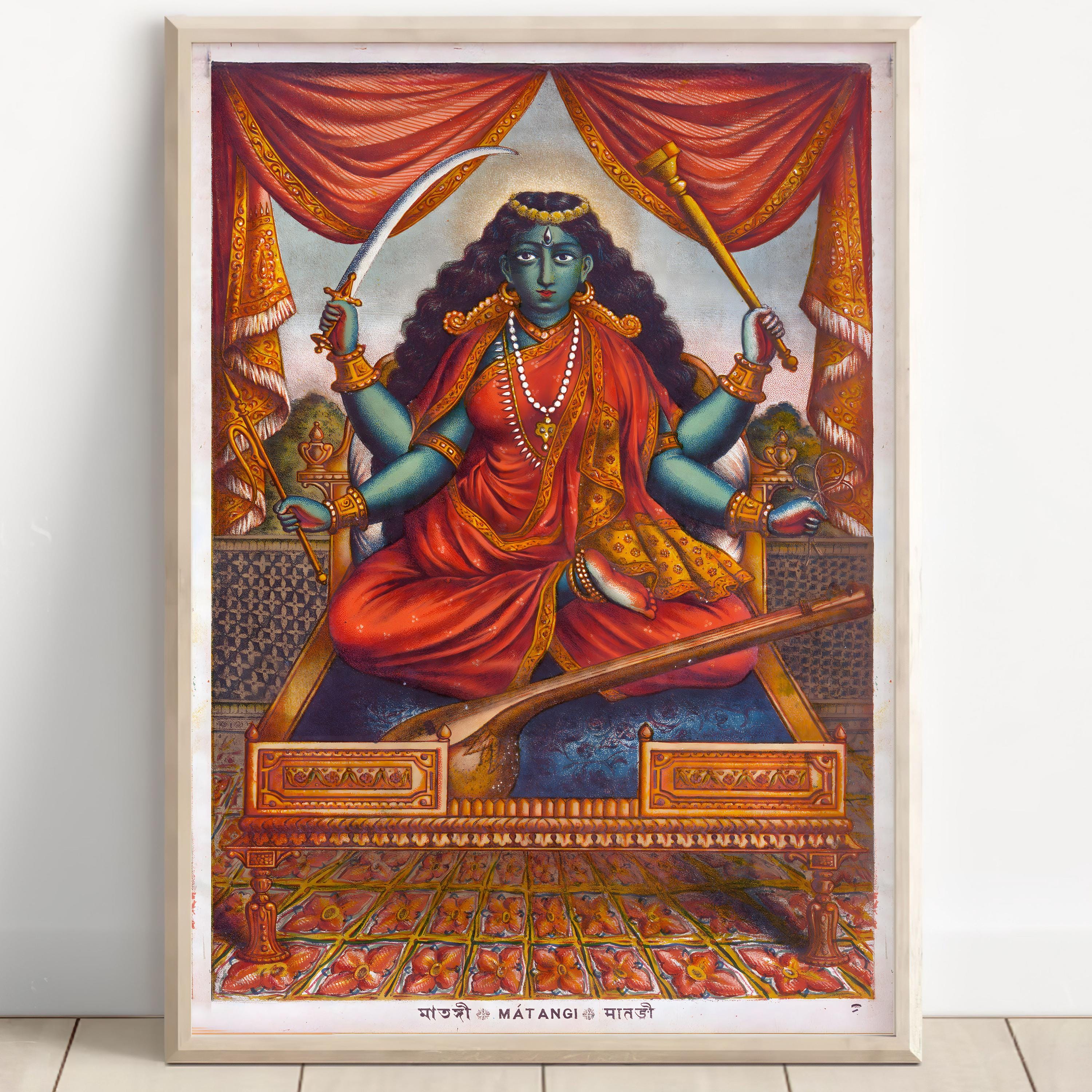
Its presiding force is Matangi—the Tantric Saraswati—patron of forbidden knowledge, music, language, and unconventional wisdom. She accepts what society rejects, revealing that truth often lives outside purity constructs.
This cycle culminates near Vasant Panchami, linking silence to eventual articulation, void to expression.
4. Ashadha Gupta Navaratri 2026 — The Monsoon Gate


Dates: July 15 – July 23, 2026
Seasonal Energy: Monsoon onset, Dakshinayana
Ashadha marks the cosmic descent—when preservation energies withdraw and the Goddess assumes command.
This Navaratri belongs to Varahi Devi, the boar-faced commander of Shakti’s armies. She is not ornamental. She is strategic.
Her symbolism is precise:
-
The boar digs beneath the surface
-
The plow uproots hidden enemies
-
The pestle grinds karmic residues
Ashadha Gupta Navaratri is invoked for:
-
Land and legal disputes
-
Psychic protection
-
Neutralization of unseen opposition
-
Recovery of lost power
Her worship is traditionally nocturnal—because some battles can only be fought in the dark.
5. The Dasha Mahavidyas — The Goddesses of Absolute Reality
Gupta Navaratri does not center the gentle Navadurgas of public worship.
It belongs to the Dasha Mahavidyas—ten wisdom forces governing time, space, dissolution, paralysis, desire, silence, and regeneration.
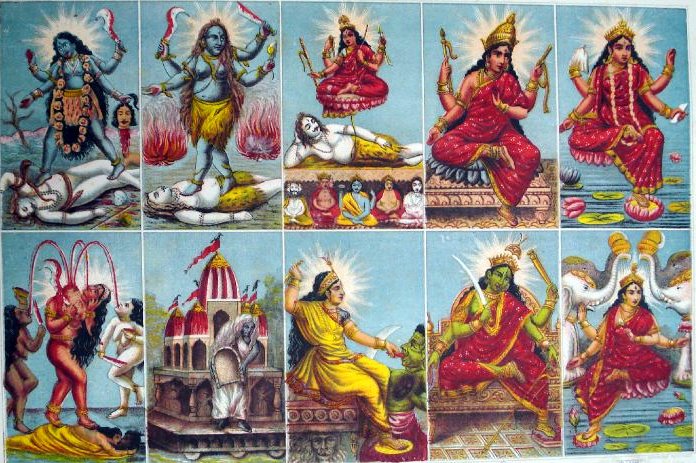
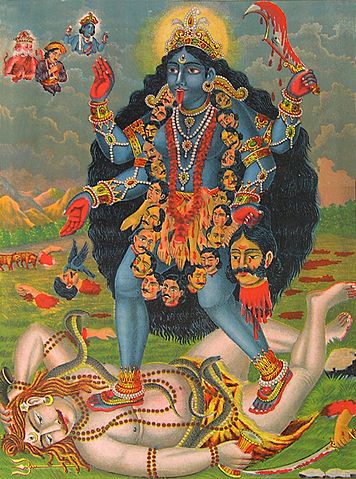

These forms are not symbolic—they are operational archetypes.
They dismantle ego, freeze adversarial forces, sever illusion, and expose the raw mechanics of existence.
During Gupta Navaratri, these energies become accessible without amplification. The calendar itself becomes the initiator.
6. Ritual Mechanics — Why These Nights Demand Precision
Gupta Navaratri rituals are engineered to generate pressure.
Key distinctions:
-
Secluded Ghatasthapana (the womb of Shakti)
-
Barley sprouting as divination
-
Night-centric worship
-
Minimal disclosure
-
Mantra over narrative
Householders are advised to approach through protective frameworks like the Durga Saptashati, while initiated practitioners may engage direct Mahavidya sādhanā.
The rule is universal:
Containment equals power.
7. From Himalayan Akhadas to Urban Apartments
Historically, Gupta Navaratris were preserved by ascetics and tantric lineages. Today, they are quietly migrating into domestic spaces—driven by one reality:
They work.
Legal knots untangle.
Creative channels reopen.
Protection stabilizes.
Long-stagnant karmas move.
Modern tools and guided formats now allow safe participation—without violating the core ethic of secrecy.
8. The Inward Revolution
Gupta Navaratri is the subconscious of the Hindu calendar.
It is the dark matter holding the visible year in orbit.
In 2026:
-
Magha (Jan 19–27) invites intellectual awakening and creative reclamation.
-
Ashadha (July 15–23) offers protection, grounding, and strategic dominance.
Their deeper teaching is simple—and uncompromising:
True transformation does not announce itself.
It happens in silence, in darkness, and in discipline.
Those who enter these nights seeking spectacle leave disappointed.
Those who enter seeking alignment often emerge changed.
The Goddess does not always arrive adorned.
Sometimes, she arrives hidden—
and asks whether you are ready to meet her without witnesses.