
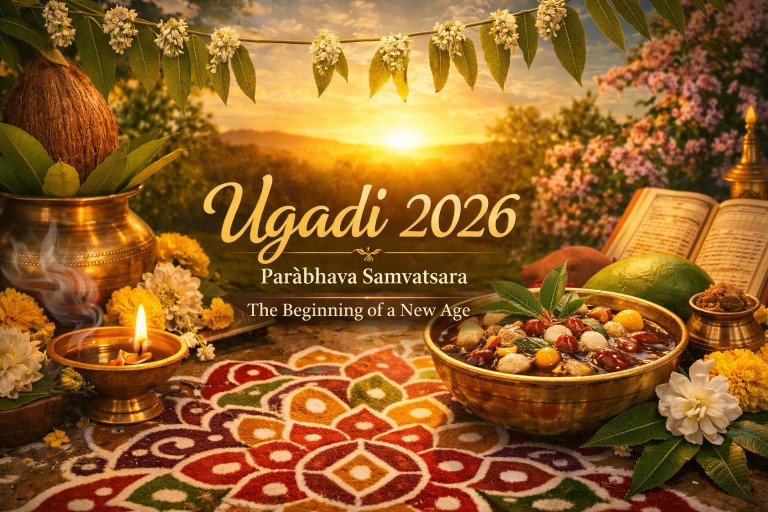

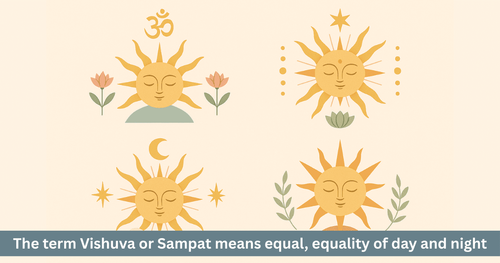
The Threshold of Time
Ugadi is not just the start of a new year.
It is the beginning of a new cycle of consciousness.
The word Ugadi (or Yugadi) comes from Sanskrit:
-
Yuga → Age
-
Ādi → Beginning
Ugadi = The Beginning of a New Age
This sacred day falls on Chaitra Shukla Pratipada—the first day of the bright half of the lunar month of Chaitra.
But in the Vedic understanding, this is more than a date.
It is the moment when:
-
Time resets
-
Nature awakens
-
Consciousness is invited to evolve
Chaitra Māsa & Vasanta Ṛtu: When Life Begins Again
Ugadi marks:
-
The beginning of Chaitra Māsa (the first month of the Vedic calendar)
-
The arrival of Vasanta Ṛtu (Spring)
This is when:
-
Trees bloom
-
Dormant energy rises
-
The Earth exhales life again
In Ayurveda:
-
Kapha begins to liquefy
-
Detoxification naturally begins
-
The body becomes ready for renewal and expansion
In the subtle body:
-
The heart opens
-
Creativity awakens
-
New pathways become possible
This is not just seasonal.
This is evolutionary timing.
The Science of Samvatsara: Time Has Personality
According to the Vedic calendar, each year is not just counted—it is named, encoded, and governed.
A year is called a Samvatsara.
-
There are 60 Samvatsaras in a repeating cycle
-
Each one carries:
-
A unique name
-
A governing deity
-
A distinct energetic blueprint
-
This is calculated based on:
-
The position of the Sun
-
The position of the Moon
Meaning: Time is not neutral.
Time has quality, direction, and intelligence.
Entering Parābhava Samvatsara
The upcoming year is known as:
Parābhava Samvatsara
Let us decode this deeply.
Meaning of Parābhava
-
Para → External forces, others, that which is beyond you
-
Bhava → State, condition, experience
Parābhava = A state shaped by external pressures that catalyze inner transformation
Not Defeat — But Dissolution of Ego
At a superficial level, Parābhava can be interpreted as defeat.
But spiritually, this is inaccurate.
In its deeper meaning:
Parābhava is the breaking of illusion.
The softening of ego.
The initiation into wisdom.
This is a year where:
-
What is not aligned may collapse
-
What is superficial may be exposed
-
What is false may be dismantled
Not to punish—
But to refine you.
The Dharma of This Year
Parābhava Samvatsara invites:
1. Reflection
-
What patterns are repeating?
-
What lessons have been ignored?
2. Correction
-
Where can you realign?
-
What needs restructuring?
3. Humility
-
Can you release control?
-
Can you listen more deeply?
4. Resilience
-
Can you stay grounded amidst change?
-
Can you grow through discomfort?
The Spiritual Invitation
This year teaches:
True strength is not domination.
True strength is alignment with Dharma.
Parābhava is not here to break you.
It is here to break what is not you.
Ugadi Pachadi: The Philosophy of Life in a Bowl
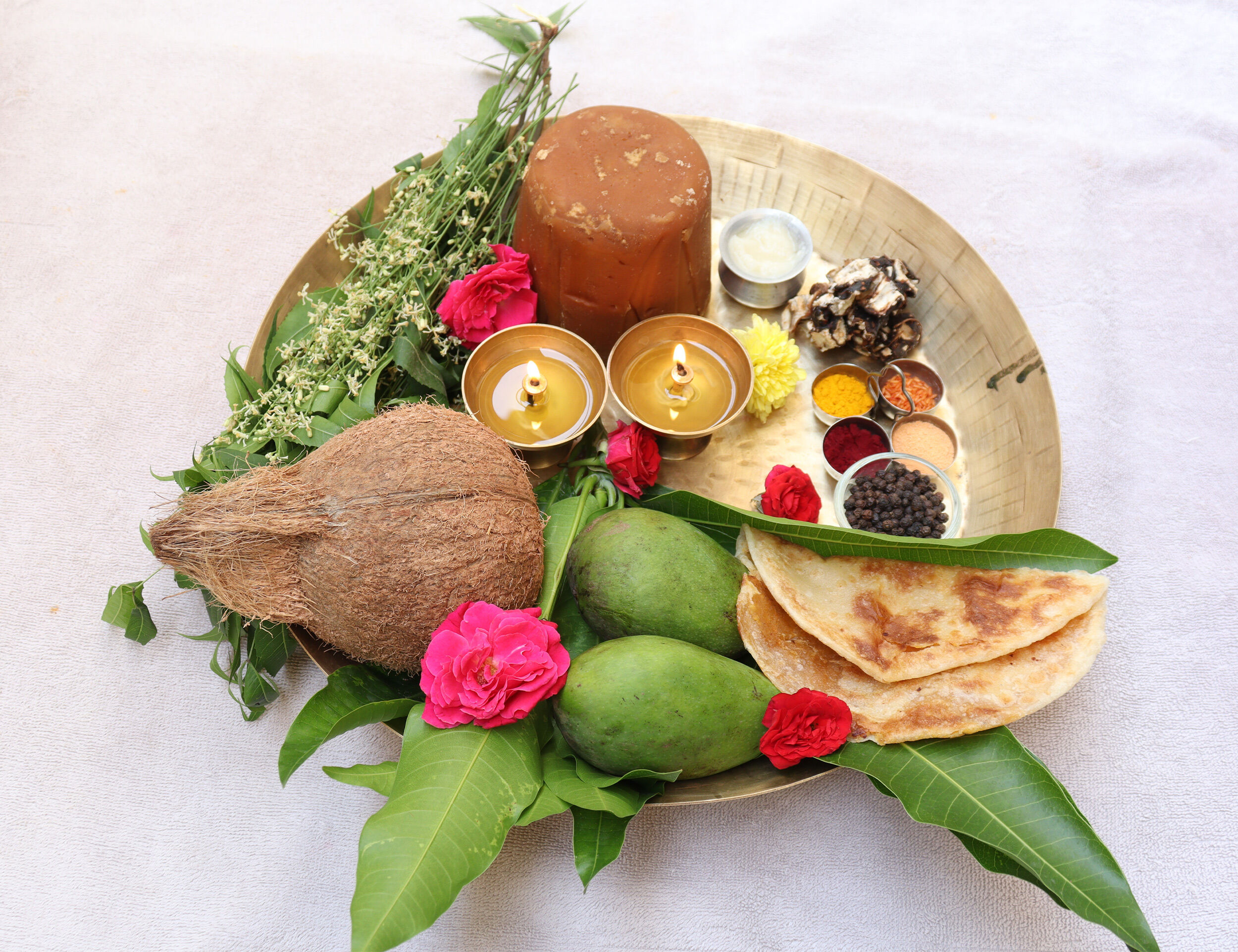
One of the most powerful rituals of Ugadi is consuming Ugadi Pachadi.
A sacred blend of six tastes:
-
Neem (bitter) → Challenges
-
Jaggery (sweet) → Joy
-
Tamarind (sour) → Surprise
-
Raw Mango (tangy) → Growth
-
Chili (spicy) → Intensity
-
Salt → Balance
This is not cuisine.
This is consciousness training.
It teaches:
Life will not be one flavor.
But it can be lived in equanimity.
Ugadi Rituals: Aligning Body, Space & Consciousness
1. Wake Before Sunrise + Abhyanga Snanam
-
Oil bath to cleanse body and subtle field
-
Enter the year with purity and intention
2. Clean and Decorate the Home
-
Physical cleaning = energetic clearing
-
Create space for new prana
3. Mango Leaf Torana
-
Hung at the entrance
-
Invites vitality and wards off negativity
4. Rangoli / Kolam
-
Sacred geometry at the threshold
-
Aligns the space with harmony and beauty
5. Seek Blessings
-
From Guru, Rishis, parents, elders
-
Acknowledging lineage activates grace
6. Offerings & Charity
-
Food, clothes, or support to those in need
-
Expands Lakshmi flow through giving
7. Sankalpa (Sacred Intention)
This is the most important.
Not resolutions.
Energetic commitments.
Ask yourself:
-
Who am I becoming this year?
-
What discipline will shape me?
-
What truth will I live?
A Simple Ugadi Sankalpa Practice
Sit in stillness.
Place your hand on your heart.
Breathe deeply.
And declare:
“I align with Dharma.
I release illusion.
I welcome transformation with awareness and grace.”
Final Transmission
Ugadi is not just a celebration.
It is a portal.
A moment where:
-
Time resets
-
Karma reorganizes
-
Consciousness is invited higher
And this year—Parābhava Samvatsara—will not allow superficial living.
It will ask you to:
-
Be real
-
Be grounded
-
Be aligned
Happy Ugadi
May this year:
-
Refine your path
-
Strengthen your spirit
-
Anchor you in Dharma
And most importantly—
May you become who you were always meant to be.
Frequently Asked Questions
What does it mean that Ugadi begins a new Samvatsara?
In Vedic timekeeping there is a cycle of sixty named years, each called a Samvatsara, each with its own qualities and character. Ugadi does not just begin a new year in general — it ushers in a specific named year in this cycle. In 2026, that year is Parabhava Samvatsara, carrying its own distinct energetic signature.
What is the significance of the named year?
Each Samvatsara is believed to color the year with particular themes and energies, offering a lens for understanding the collective tone of the time ahead. Entering a new Samvatsara at Ugadi is thus seen as stepping into a fresh chapter of consciousness — not just a date change, but a shift in the quality of the year itself.
How can I align with a new Samvatsara?
By treating Ugadi as a conscious threshold — reflecting on the year completing, honoring the renewal of time and nature, and setting intentions attuned to the new cycle. Entering a named year invites awareness of the broader rhythms of time, encouraging one to live the coming year with intention, presence, and openness to evolution.
