Every year, as spring begins to stir life back into the earth, Chaitra Navaratri arrives as one of the most spiritually potent periods in the Hindu calendar. It marks the beginning of the Chaitra month, which in many traditional calendars is also the start of the Hindu New Year.
Nature is renewing itself. Trees bloom. The air becomes lighter. Life re-emerges after the stillness of winter.
In this same way, Chaitra Navaratri represents the spiritual rebirth of consciousness.
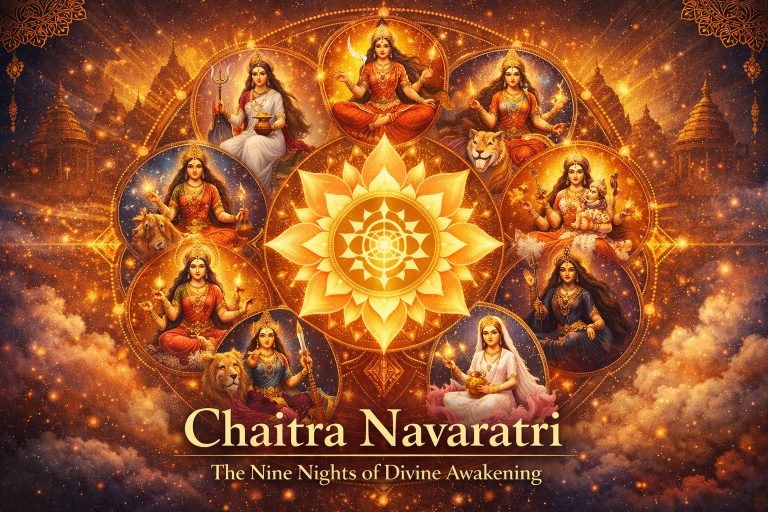
For nine sacred nights, devotees honor the nine manifestations of the Divine Mother — the Navadurga. Each goddess represents a stage of inner evolution, guiding the seeker from grounding and discipline to ultimate spiritual illumination.
These nine nights are not simply a festival.
They are a map of transformation.
Each day invites us to awaken a specific energy within ourselves.
The Deeper Meaning of Navaratri
The word Navaratri literally means:
Nava — Nine
Ratri — Nights
But in the yogic tradition, night symbolizes the inner world.
During the night, the senses withdraw and the subconscious becomes active. Navaratri therefore represents a journey into the inner dimensions of consciousness.
The Divine Feminine — Shakti — is the cosmic force behind creation, preservation, and transformation. During Navaratri, this force is worshipped in its nine progressive expressions, each revealing a different aspect of spiritual awakening.
The journey begins with grounding the body and ends with dissolving the ego into pure consciousness.
The Nine Forms of Durga (Navadurga)
Day 1 — Shailaputri
The Daughter of the Mountain
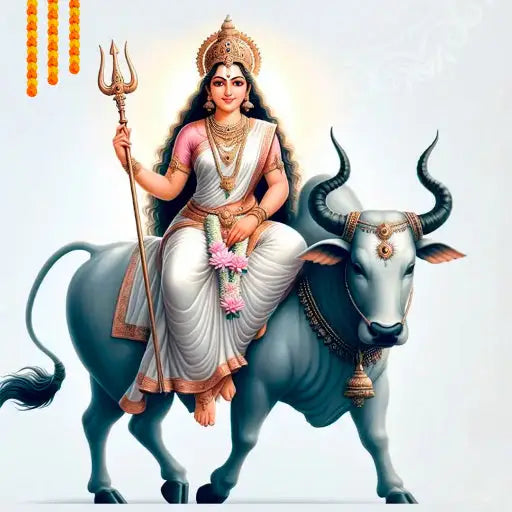
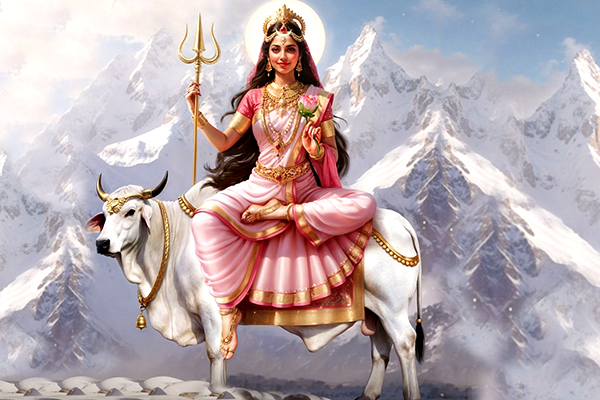
Shailaputri represents the foundation of spiritual life.
Her name means “Daughter of the Mountain”. She is the incarnation of Parvati in her earliest form, born as the daughter of King Himavan, the lord of the Himalayas.
She rides a bull (Nandi) and carries a trident and lotus.
Symbolically, Shailaputri represents:
• grounding
• stability
• beginning the spiritual journey
• connection with nature
In yogic terms, she corresponds to the Muladhara Chakra (Root Chakra) — the center of stability and survival.
Before spiritual awakening can begin, one must first establish inner stability and discipline.
Day 2 — Brahmacharini
The Goddess of Spiritual Discipline
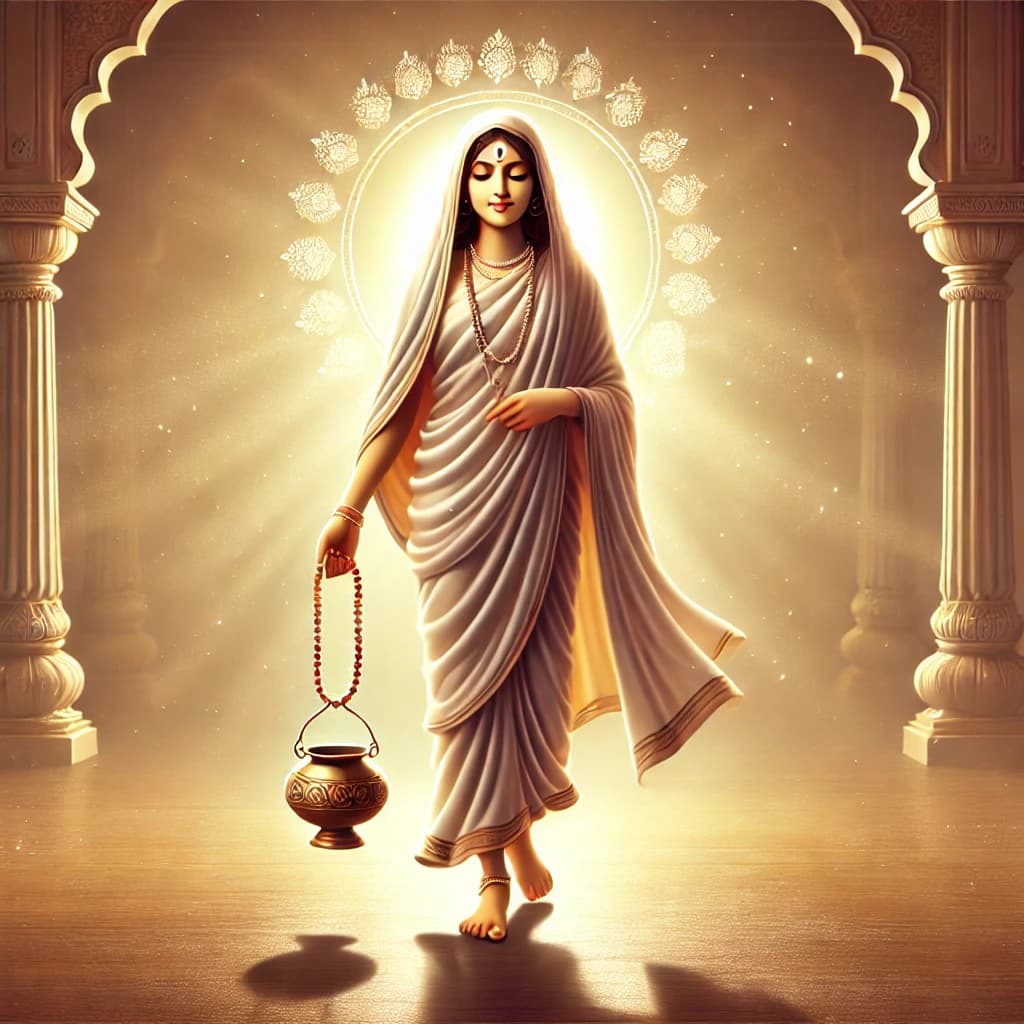

Brahmacharini represents tapas — the fire of spiritual discipline.
After her rebirth as Parvati, she performed intense austerities to win the love and union of Lord Shiva.
She walks barefoot, holding a rosary (japa mala) and a water pot (kamandalu).
Her form teaches:
• dedication to spiritual practice
• self-control
• perseverance
• inner strength
This stage corresponds to the Swadhisthana Chakra, where emotional discipline and purification begin.
Spiritual awakening requires effort, patience, and unwavering devotion.
Day 3 — Chandraghanta
The Warrior of Divine Courage


Her name comes from the crescent moon shaped like a bell on her forehead.
She rides a tiger and carries multiple weapons, symbolizing her readiness to destroy negativity.
Her energy represents:
• bravery
• protection
• awakening the warrior spirit
• dissolving fear
In the spiritual journey, this stage represents activating the Manipura Chakra, the center of power and transformation.
Once discipline is established, the seeker develops fearlessness and inner strength.
Day 4 — Kushmanda
The Cosmic Creator
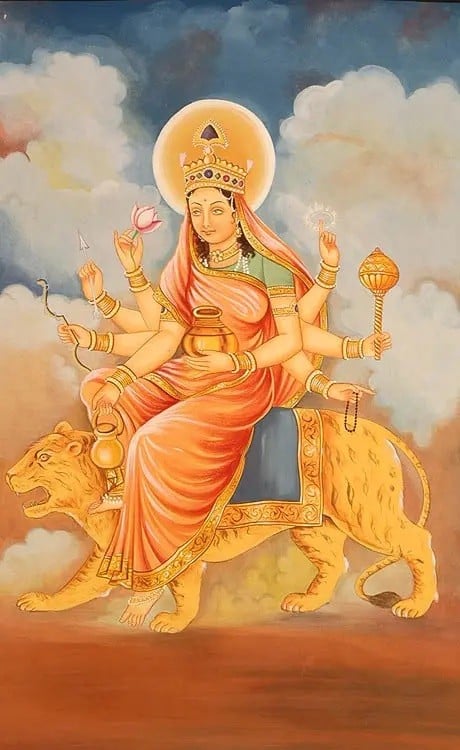
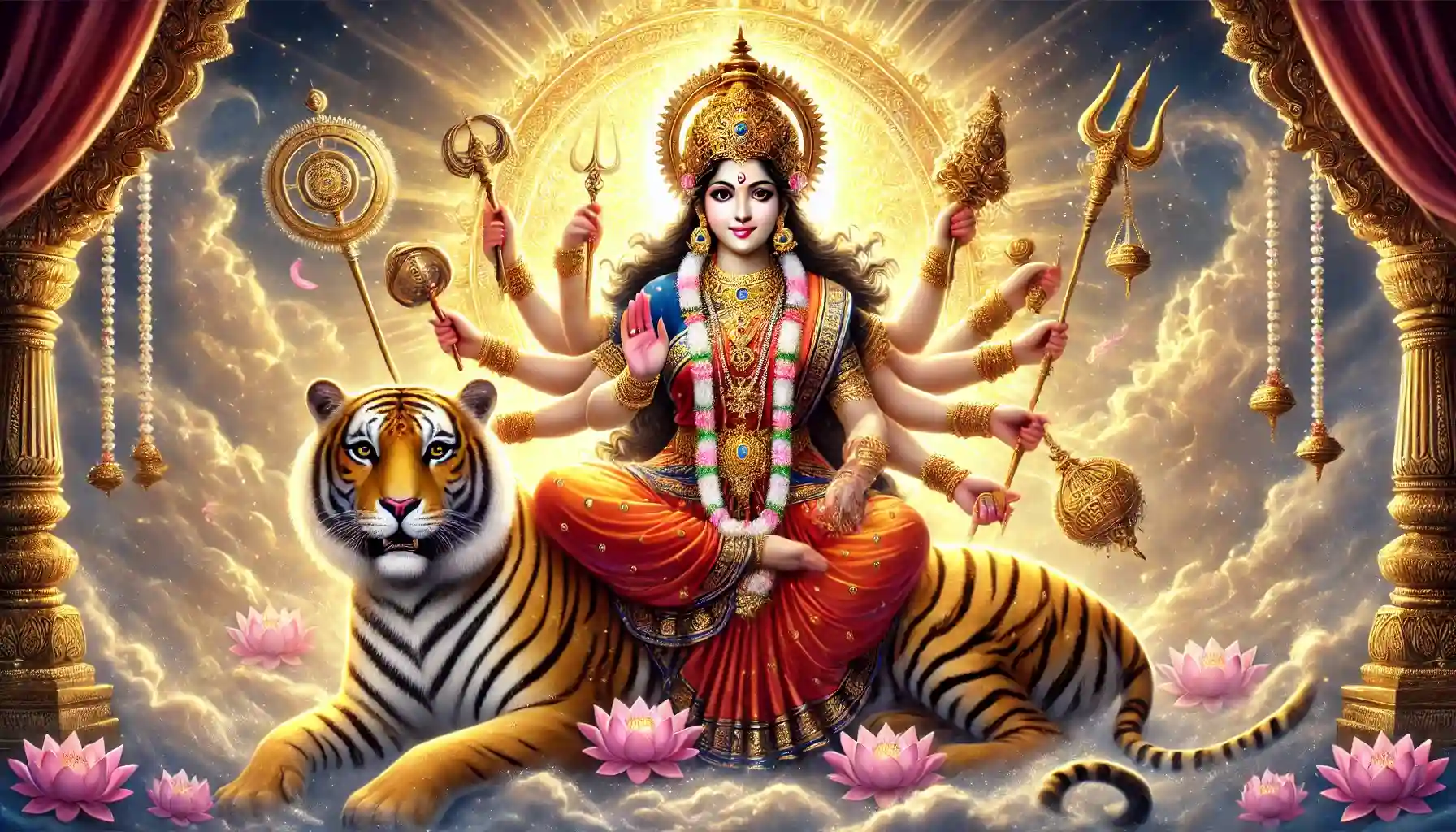

Kushmanda is believed to be the creator of the universe.
According to tradition, when the universe was engulfed in darkness, she smiled and created the cosmic egg — the Brahmanda.
Her name reflects this:
Ku — little
Ushma — energy or warmth
Anda — cosmic egg
She represents:
• creative power
• vitality
• cosmic intelligence
• divine light
This stage corresponds with the Anahata Chakra (Heart Center), where creativity and compassion awaken.
Here the seeker begins to understand that creation itself is divine play.
Day 5 — Skandamata
The Mother of Divine Wisdom


Skandamata represents the nurturing aspect of divine motherhood.
She holds her son Skanda (Kartikeya), the commander of the celestial armies.
She symbolizes:
• unconditional love
• protection
• spiritual nourishment
• wisdom transmitted through compassion
Her energy corresponds with the Vishuddha Chakra (Throat Center), where truth, clarity, and divine guidance emerge.
At this stage, the seeker begins to serve the world with wisdom and compassion.
Day 6 — Katyayani
The Goddess of Righteous Action


Katyayani is one of the most powerful warrior forms of Durga.
She was created by the combined energies of the gods to defeat the demon Mahishasura.
She represents:
• righteous anger
• justice
• protection of Dharma
• decisive action
Spiritually, this stage relates to the Ajna Chakra (Third Eye).
At this level, the seeker develops clarity of vision and moral courage.
The ability to stand for truth without hesitation emerges.
Day 7 — Kalaratri
The Destroyer of Darkness

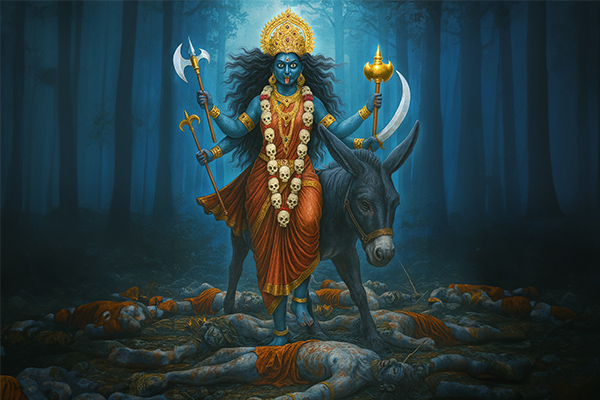
Kalaratri is perhaps the most misunderstood form of the Divine Mother.
Her appearance is terrifying — dark complexion, wild hair, blazing eyes.
But she is the destroyer of ignorance and fear.
She represents:
• destruction of illusion
• confronting shadow
• transformation through crisis
• spiritual purification
This stage corresponds with the Sahasrara gateway, where the ego begins dissolving.
Every spiritual journey must eventually pass through the night of the soul.
Kalaratri guides the seeker through that darkness.
Day 8 — Mahagauri
The Radiance of Purity
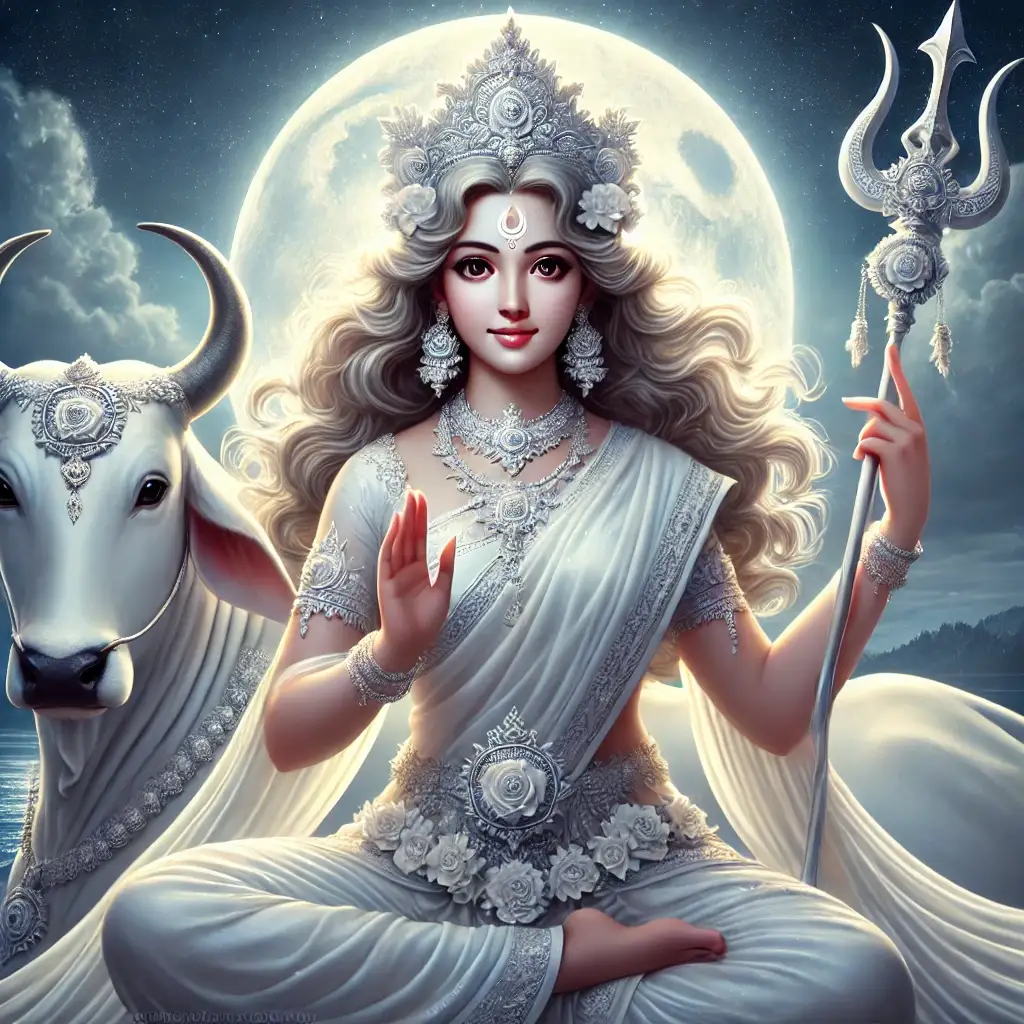


After the destruction of impurities comes purification and grace.
Mahagauri represents:
• serenity
• forgiveness
• compassion
• spiritual clarity
Her radiant white form symbolizes complete purification of the soul.
At this stage, the seeker experiences inner peace and divine presence.
The mind becomes calm and luminous.
Day 9 — Siddhidatri
The Giver of Spiritual Perfection


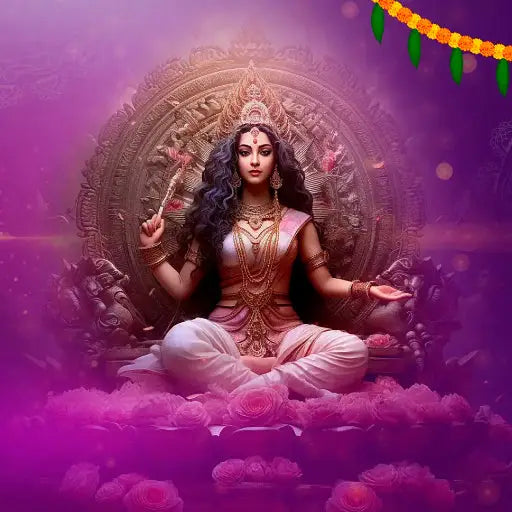
The final form of Navadurga is Siddhidatri, the bestower of spiritual powers (siddhis) and ultimate realization.
She represents:
• enlightenment
• fulfillment
• divine unity
• transcendence
At this stage, the seeker recognizes that the Divine Mother was never separate.
The journey ends where it began — within.
The Inner Journey of Navaratri
The nine days of Navaratri can be understood as a map of human evolution.
1 — Grounding
2 — Discipline
3 — Courage
4 — Creativity
5 — Compassion
6 — Righteous action
7 — Destruction of illusion
8 — Purification
9 — Enlightenment
It is the journey from instinct to illumination.
Why Chaitra Navaratri Is Especially Powerful
While Navaratri is celebrated multiple times each year, Chaitra Navaratri holds special significance because it coincides with the arrival of spring.
Spring represents:
• renewal
• fertility
• new beginnings
• spiritual awakening
In many traditions, this period also marks the beginning of the cosmic cycle of the year.
Just as the earth awakens from winter, the seeker is invited to awaken dormant spiritual energy.
How Devotees Observe Chaitra Navaratri
Common practices include:
• fasting or dietary purification
• chanting Durga mantras
• meditation and prayer
• recitation of Durga Saptashati
• visiting temples
• honoring the feminine principle in all forms
Many households also perform Kanya Puja, where young girls are honored as living embodiments of the Divine Mother.
The Real Message of Navaratri
Navaratri reminds us that the feminine is not weakness.
It is the force that creates universes, destroys ignorance, and awakens consciousness.
Within every human being exists this Shakti — the power to transform, create, protect, and illuminate.
The nine nights are not simply about worshiping goddesses outside of us.
They are about awakening the goddess within.