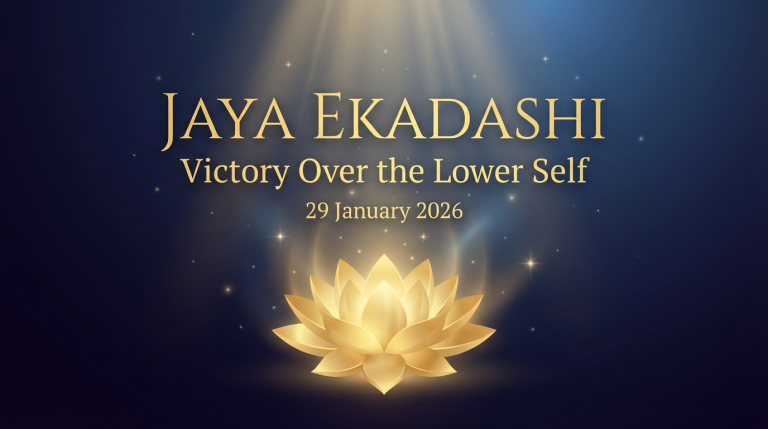
Every month in the Hindu lunar calendar brings two Ekadashi tithis — on the 11th day (Ekadashi) of the shukla paksha (waxing moon) and krishna paksha (waning moon). However, all Ekadashis are not the same: some have unique names, legends, and spiritual significance. Today is Jaya Ekadashi — a powerful day for inner victory, purification of mind and heart, and devotion to Lord Vishnu. This year Jaya Ekadashi is observed on Thursday, 29 January 2026.
The Ekadashi tithi begins on 28 January in the evening and continues till early afternoon on 29 January. According to the Hindu practice of udayatithi — when a tithi that spans two days is observed on the day it rises — this Ekadashi is celebrated on 29 January.
✨ What Does “Jaya Ekadashi” Mean?
The word “Jaya” literally means victory — victory over ignorance, ego, negativity, and past karmas that bind the soul. Jaya Ekadashi is known for its capacity to:
Purify the mind and emotions
Help devotees overcome obstacles in life
Bring spiritual clarity and calm
Help dissolve deep-rooted karmic impressions
In many scriptures, observing this vrat (fast) with faith and discipline is believed to uplift one’s spiritual journey and cultivate inner strength. It is also said to liberate devotees from fear, past debts of actions, and birth-and-death cycles of lower realms.
🌿 Spiritual Significance & Legend
According to traditional lore, Jaya Ekadashi is a day when Lord Vishnu’s grace descends especially upon sincere devotees. It is said that even great sins are washed away for those who undertake the Ekadashi vrat with devotion, self-restraint, and purity of heart.
The legend often associated with this day involves celestial beings or devotees who were freed from suffering and afflictions by observing this vrat — thereby attaining Vaikuntha (divine abode) or spiritual liberation. These stories are told to inspire faith, discipline, and surrender to the divine will.
🕐 Timings & Panchang Details (29 January 2026)
Here’s a quick timing guide for today’s sacred observance:
Ekadashi Tithi Begins: 28 Jan (4:35 PM)
Ekadashi Tithi Ends: 29 Jan (1:55 PM)
Parana (Vrat Breaking) Time: 30 Jan (early morning — roughly 7:10 AM to 9:20 AM)*
*Always check your local Drik Panchang or temple schedule for exact parana muhurat in your region.
🙏 How to Observe Jaya Ekadashi Vrat
Devotees traditionally observe Jaya Ekadashi with the following practices:
1. Fasting (Upavas)
Some observe a complete fast — abstaining from all grains, beans, and food, taking only water or fruits. Others observe a partial fast — with fruits, milk, and sattvic (pure) items.
2. Morning Rituals & Puja
Wake up early, purify yourself with bath
Light a lamp and worship Lord Vishnu (and Goddess Lakshmi)
Offer tulsi leaves, flowers, incense, and bhog (pure food offering)
3. Chanting & Scriptures
Devotees often chant the Vishnu Sahasranama (the thousand names of Vishnu), Hare Krishna maha-mantra, or engage in bhajan/kirtan and meditation. These devotional practices are believed to magnify the spiritual potency of the day.
4. Charity & Donations (Daan)
Giving charity on Ekadashi — especially to saints, Brahmins, the needy, or donating food, clothes, blankets in winter — is considered especially meritorious. Items such as seven grains, sesame, ghrita (clarified butter), and spiritual books are traditionally recommended for donation.
⚠️ Things to Avoid on Ekadashi
To gain full spiritual benefit from the vrat:
Avoid grains, beans, and cereals
Refrain from meat, alcohol, and onions
Avoid anger, envy, and negative thoughts
Reduce worldly distractions — focus on prayer and self-reflection
🧘♂️ The Inner Promise of Ekadashi
Beyond just fasting, Jaya Ekadashi invites us to:
Slow down, contemplate our purpose
Stand firm in self-discipline
Cultivate compassion, patience, and surrender
Reconnect with the eternal through bhakti and inner silence
For many devotees, Ekadashi is a reset — a spiritual purification that helps anchor the soul amidst life’s storms. When observed with sincerity, it becomes a vehicle for inner transformation, not just a ritual.
🌸 In Closing
Whether you are observing the fast with strict discipline or offering a heartfelt prayer at your home altar or temple today, Jaya Ekadashi is a powerful opportunity for spiritual renewal. It calls you to embrace humility, align with higher values, and step closer to peace within.
May this Jaya Ekadashi bless you with inner victory, serenity, and clarity — leading your journey toward dharma, shanti, and spiritual liberation.